


One in five people would give up part of their salary for a nicer office.
Companies are competing for skilled workers, and employees expect a compelling overall package. In addition to salary, working hours, and benefits, one thing in particular is decisive today: the place where people work every day.
Mindspace teamed up with market research company Civey to investigate the influence of office quality, amenities, and location in a representative online study*. The results clearly show that Gen Z, which is currently entering the job market, has completely different expectations of offices than older generations.
A Better Office Instead of a Higher Salary
One key finding underscores the relevance of attractive workplaces: 22.8% of respondents would accept a salary reduction of up to 20% for a nicer and healthier office.
This willingness is particularly pronounced among young employees between the ages of 18 and 29. Here, the number of those who would accept a pay cut is as high as 36.9%, twice as high as in the 50 to 64 age group (18.1%). These differences make it clear that high-quality workspaces are increasingly becoming a strategic advantage in the competition for talent.
Workplace Design Becomes a Competitive Factor
This trend is also reflected in the choice of employer: 42.7% of respondents say that the design of their working environment has a strong or very strong influence on which company they choose.
Women in particular attach greater importance to this aspect (47%) than men (38.7%). Overall, expectations continue to rise with age. An appealing work environment thus becomes a real competitive advantage, especially for companies that want to attract women and experienced professionals.
What Modern Offices Need to Offer
In addition to equipment, the question arises as to what the office is actually needed for today. More than half of those surveyed (58.5%) see its main function as concentrated work, while 46% prioritise creative processes.
But expectations differ: younger employees seek inspiration and relaxation in the office (17.6%), something that older generations demand much less frequently. The growing need for quiet spaces shows that work and relaxation are increasingly intertwined, and that employers need to respond to this.
Young Talent Demands Comprehensive Workplace Offerings
Across all age groups, functional standards such as ergonomic furniture, quiet areas, and good lighting are a priority. At the same time, Gen Z has a much broader understanding of what an attractive workplace needs to offer today.
For them, the office does not end at the office door. Quite the contrary. People aged 18 to 29 are much more likely than the average across all age groups to want amenities in their immediate surroundings: from wellness areas (25.7% vs. 8% overall) and gyms (31.6% vs. 14.3%) to service providers such as hairdressers (23.8% vs. 11.9%).
For Gen Z, the office is becoming an anchor point where work, everyday life, and well-being naturally belong together.
Peter Demidov, General Manager of Mindspace Germany, summarises the results: “The study shows how high and how varied expectations of modern offices are. Gen Z in particular expects places that combine work, everyday life, and well-being. Successful working environments must therefore enable a work-life blend that is flexible, well thought-out, and generationally appropriate.”
Civey surveyed 2,000 employees from companies with hybrid working models online between October 31 and November 16, 2025. The results are representative thanks to quotas and weightings.
The Author

You might also like these reads — picked just for you.
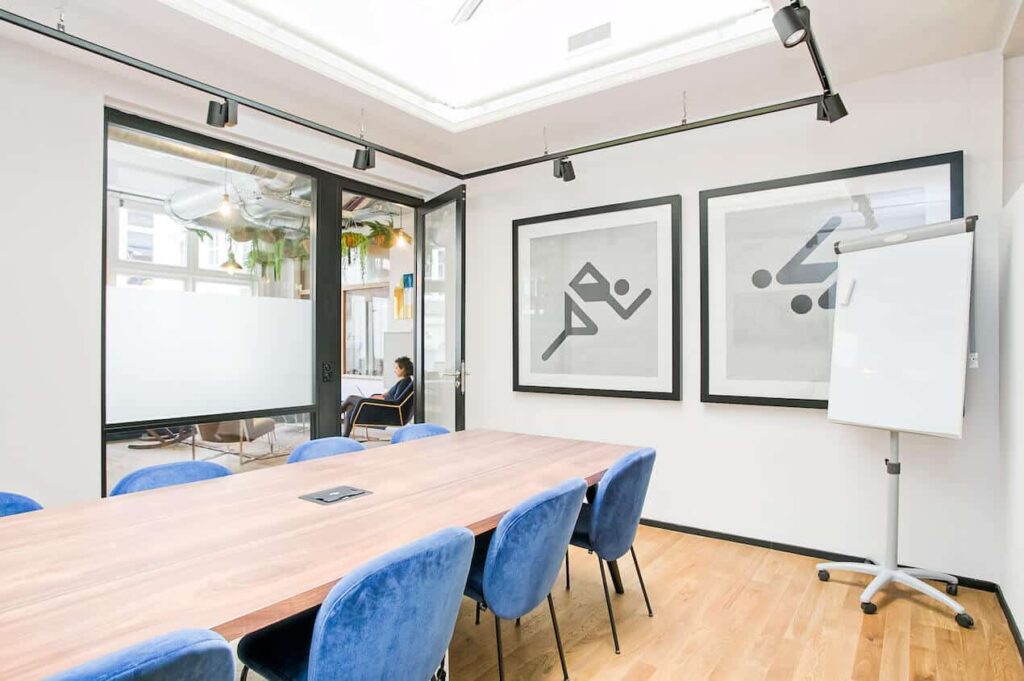
Best Coworking Spaces in Amsterdam: Your Complete Guide
Your coworking space in Amsterdam ends up doing far more work than a desk and a Wi-Fi password ever could. You take client calls there. You meet the people who send you your next project, and on most weekdays you spend more waking hours there than in your own flat. Choose badly and you’ll spend […]

Where to Rent Office Space in Amsterdam: Best Areas Compared
Amsterdam squeezes a remarkable range of business districts into a city you can cross by bike in half an hour. Pedal from a glass tower in Zuidas to a gabled canal house in the centre and the rent, the neighbours and the impression you make on clients all shift along the way.

Amsterdam Office Rental Prices: Why Flexible Workspace Is the Smarter Choice
You're comparing Amsterdam office costs, and the first numbers you'll find look almost too clean. A conventional lease runs 175 to 425 euros per square metre a year, depending on which postcode you're chasing. A serviced or flexible desk runs 250 to 800 euros a month, sometimes more, again shaped by district and building quality. Line those two numbers up side by side and the lease wins on paper, every time.
