


New York has the densest concentration of coworking spaces of any US city, the widest range of price points, and the most varied set of neighbourhood ecosystems attached to any of it. Picking the wrong one is costly, and rent contributes with a small portion to that cost. The wrong space wastes two hours a day on the commute, drops calls in the middle of client pitches, or puts you in a room where nobody around you is doing the same work as you are.
So how do you find the perfect coworking space for you? We’ve created this guide to help.

Why Coworking Is So Popular in New York City
New York has one of the world’s highest concentrations of coworking spaces, and demand remains just as strong as the growing supply. This change happened long before the pandemic accelerated the growth of remote working. Because Manhattan office costs have been so expensive for decades, it makes sense that the city pioneered coworking, where businesses share the overhead and pay only for the seats they need.
This model stays strong in 2026 because of the current workforce structure. Freelancers in advertising, design, legal tech, and content production who never had a fixed office in the first place make a large part of that workforce. Distributed teams whose headquarters sit in San Francisco or London and who need a credible New York base for client meetings are here, too. Founders who have raised enough to need desks but not enough to sign a ten-year lease. Hybrid teams that are sized down from full-floor tenancies and now take flexible space on a rolling basis. Different groups use coworking for different reasons. Whether it’s the premium facilities or the ability to come and go as you please, coworking provides answers that traditional real estate can’t.
The 6 Best Coworking Spaces in New York City
New York City offers a rich coworking spaces scene. Each space below gets profiled on location, standout features, ideal member, and pricing, where it is publicly available. The order reflects the offer strength, not the distance from Manhattan.
Mindspace Williamsburg: Best Overall for Premium Brooklyn Coworking

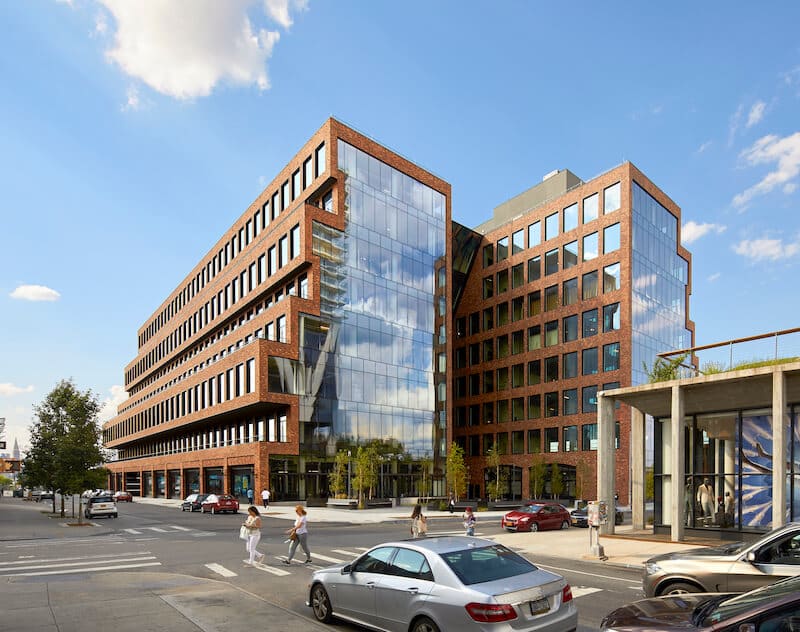
Mindspace Williamsburg address is 25 Kent Avenue, on the Brooklyn waterfront. Placed inside a newly built landmark development, Mindspace sets a new standard for what a New York coworking space should be. The location itself is not enough. The coworking space comes with amenities and member benefits that strengthen Mindspace’s position as premium provider.
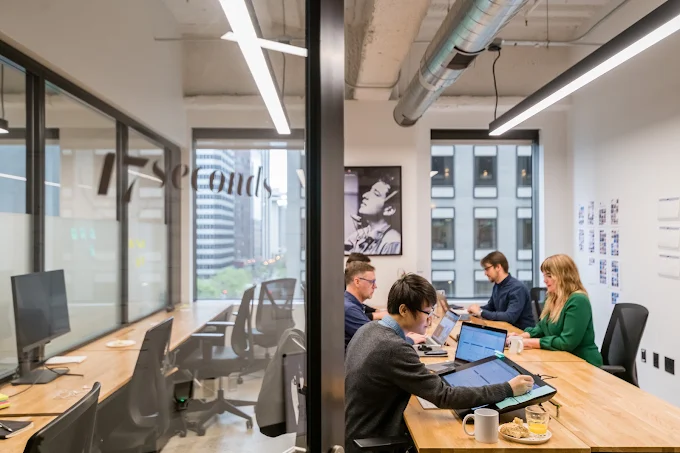
The views are the most dramatic of any Brooklyn coworking space. Floor-to-ceiling windows frame the unobstructed Manhattan skyline across the East River. The 37,400 square feet are spread across multiple floors, with 446 workstations including hot desks, dedicated desks, private offices, and team suites. Seven meeting rooms are bookable by the hour for client pitches and team sessions. A communal rooftop deck with panoramic 360-degree views over Brooklyn and Manhattan is open to members for coffee breaks and informal client hosting.
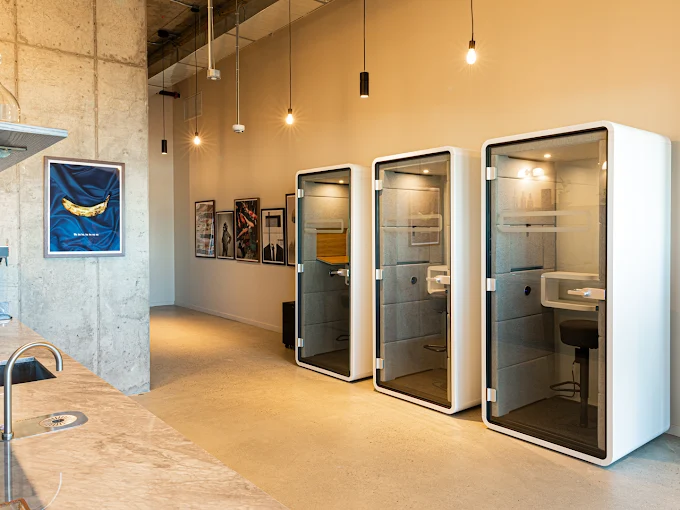
The 25 Kent building features a high-end fitness center with Peloton bikes, a bouldering wall, meditation pods, and dedicated rooms for yoga and spinning, plus spa-style locker rooms. You can fit a full workout into a lunch break without leaving. Add in reliable enterprise Wi-Fi, private phone booths, an on-site community manager, 24/7 access, pet-friendly policy, bike and car parking, and the workday runs the way you want it to. Event spaces and on-demand coworking are also available for members and day-pass visitors.
Mindspace Williamsburg is best for: founders, creative teams, and executives who want premium infrastructure with Brooklyn character, and who value community alongside credibility. Pricing starts from a coworking day pass for drop-ins, scales through coworking memberships and dedicated desks, and runs up to private offices and team suites for larger teams.
Industrious
Industrious operates multiple Manhattan locations, including Flatiron, Rockefeller Center, and the World Trade Center. The brand is known for a more subdued, corporate aesthetic than the early coworking generation. Expect professional interiors, daily breakfast, and quiet floors designed for established companies rather than early-stage startups. There are plenty of meeting rooms, and while there are community events, they are sophisticated and low-key. Pricing varies by location and sits at the upper end of the Manhattan market.
WeWork
WeWork created the original model for modern coworking and still manages more locations in the city than anyone else. After a public reorganization, the company closed its weaker offices and kept only the strongest performing sites. Expect familiar brand standards, global network access if you take an All Access membership, and neighbourhoods that span Midtown, SoHo, Williamsburg, and further. Amenities vary between buildings, so the right question is never WeWork versus not, but which WeWork, compared to what else sits in the same neighbourhood.
WORKVILLE
WORKVILLE at 1412 Broadway in Midtown South is a boutique operator known for its three outdoor terraces, including a rooftop with Empire State Building views. The space runs across four floors with private offices, team suites, and coworking seats in a design-led interior that photographs well. The management team is hands-on, which matters when something goes wrong at 5 pm on a Friday.
The Malin
The Malin’s SoHo and NoMad locations are designed for professionals who prefer a workspace with the high-end feel of a private members’ club. Think library-style desks, velvet lounge chairs, and a quiet tone that helps you focus. No open-plan chaos, no founders pitching in the kitchen, and no hallway small talks. The Malin leans toward consultants, executives, and independent operators rather than startup teams.
The Farm SoHo
Located at 447 Broadway, The Farm SoHo fully embraces a rustic-industrial style. It features the classic look of 2010s coworking: exposed brick, reclaimed wood, and string lights. The price point is lower than most SoHo competitors, which keeps the community full of freelancers, early-stage founders, and creatives. Meeting rooms are modest but serviceable.
Coworking Amenities Worth Looking For in NYC
Coworking standards vary across New York providers. The difference between a space that fuels your work and one that drains your focus comes down to the interior layout and amenities on offer. Use this as a checklist when you’re deciding.
Start with Wi-Fi, because a coworking space with unstable internet is not a coworking space. Ask about bandwidth per member, wired Ethernet options, and the backup when the main connection drops. You’ll also take confidential calls, so count the soundproofed phone booths on any tour and compare them to the member headcount. Meeting rooms matter for the same reason: one that shows up in the brochure but is permanently booked is worse than none at all. Mindspace Williamsburg runs seven, bookable by the hour, with external guests welcome.
Wellness infrastructure earns its place when it’s actually used. A high-quality on-site gym makes a ten-hour day manageable in a way a traditional office never will. Community programming matters too, founder talks, industry mixers, event spaces that hold 50 to 100 people, all of it changes what networking looks like. And the kitchen and coffee setup carry real weight, because half the value of coworking lives in the unplanned conversations over a snack.
Round it out with 24/7 access, proper security, printing, IT support, and mail handling. These are the operational details that decide whether the space is functional or just photogenic. A virtual office plan can add the address and mail handling separately if your main membership doesn’t include them.
Coworking Prices in New York City (2026)
NYC office pricing covers more ground than any other US market. A hot desk in a converted Bushwick warehouse and a fitted floor in Midtown can sit thousands of dollars apart, so getting a feel for the spread before you book viewings saves you a lot of wasted afternoons.
Day passes at the major New York providers run from $35 to $75. Williamsburg sits at $60, which puts you in the upper bracket of the range and gets you a designed floor, proper coffee, and a building you can actually bring a client into. Monthly memberships across the city land between $300 and $700, and Mindspace Williamsburg comes in at $499 for full access to the Brooklyn floor. If you want to hop between Mindspace locations across the network, All Access bumps that to $549.
For a visiting team or a focused project sprint, a daily private office at Williamsburg is $400 with no membership commitment. Meeting rooms book by the hour at $105 and stay open to non-members too, so you can lock in a room for a pitch or an interview without being on a plan. Virtual office plans run $140 a month if you need a Brooklyn business address without the desk.
NYC Coworking by Neighbourhood: Where to Base Yourself
The neighbourhood decision comes before the space decision in New York. Where you work affects everything from the people you meet to the length of your commute. More importantly, it sets the tone for your business when you bring clients in for meetings. Three primary coworking zones cover most of the sensible options.
Midtown and Flatiron handle finance, legal, consulting, and enterprise satellite teams. Grand Central, Penn Station, and the Midtown interchanges mean everyone can get there. The look is corporate, the pace is fast, and the premium on square footage is highest. Choose this zone if your week is client meetings with bankers, lawyers, or anyone in a suit.
SoHo, NoMad, and Flatiron South cover creative, agency, fashion, and media. The spaces lean design-first, the addresses read well on a pitch deck, and the member mix includes the kind of companies that hire for taste as well as skill. Trade-offs: tighter footprints, noisier streets, fewer large conference rooms.
Williamsburg and the wider Brooklyn waterfront suit tech, creative, and founder-led teams who have decided that the Midtown commute is no longer the price of doing business in New York. Mindspace Williamsburg sits in this bracket, with 25 Kent Avenue, an 8-minute walk from the Bedford Avenue L station and the same from the Nassau Avenue G station. The Manhattan skyline sits directly across the East River, in view from the floor.
How to Choose the Right Coworking Space in New York City

Five questions will cut through the noise and help you choose the right coworking space in NYC.
First, location. The neighbourhood decision comes before the space decision. Where are your clients? Where does your team live? What does the business want to look like to the outside world? Get this right and everything downstream gets easier.
Second, the budget and membership type. A day pass answers sporadic use. A monthly membership suits two or three days a week. A dedicated desk or private office is the right model once the workspace becomes a daily habit.
Third, amenity priorities. Wellness infrastructure, meeting room access, prestige address, community programming. Rank what matters, and use the ranking to shortlist.
Fourth, team size and growth. A two-person team and a fifteen-person team need different solutions, and a space that fits you today should also fit you in nine months. Ask about upgrade paths before you sign.
Fifth, community fit. Some spaces are built for networking, others for focus. Know which you need. Mistake this one, and you will be miserable by month two.
Visit mindspace.me to explore Mindspace Williamsburg and book a tour.
Frequently Asked Questions
Is a coworking space day pass worth it?
A coworking day pass is worth it for anyone who needs professional infrastructure occasionally rather than daily. Freelancers with a quarterly client pitch, remote workers visiting New York for a week, or founders who need a confidential space for one particular afternoon all fit this profile. You get the Wi-Fi, the phone booths, the meeting rooms, and the address without the monthly commitment. Where day passes really earn their cost is as a trial before you sign anything longer. Visiting during actual working hours tells you whether the internet holds under load, whether the noise level works for your calls, and whether the community feels right. At Mindspace Williamsburg, a day pass costs $65 and gives you full access to the space, including the rooftop and fitness facilities. For occasional use, that is a strong value against the $85-plus average across the city.
Can I use a coworking space just for client meetings, without a full membership?
You can at many providers, and at Mindspace Williamsburg you can book a meeting room by the hour as an external guest without holding a membership. Rooms run at $105 per hour. This makes sense for teams that work from home most of the time but need a professional setting for quarterly reviews, new client introductions, or interviews. A daily private office at $600 covers situations where you need more than a meeting room but less than a month. The practical thing to check before committing to a pay-as-you-go approach is room availability, since popular slots at desirable addresses book out fast. A phone call to the space ahead of time beats showing up with a client and finding the calendar full.
How many days per week do you need to use a coworking space before a monthly membership makes financial sense?
The breakeven point between day passes and a monthly membership sits at roughly four to six visits per month for most mid-range providers. At Mindspace Williamsburg, a $65 day pass and a $449 monthly coworking membership mean you reach breakeven at around seven visits. If you are in the space more than once a week with any consistency, a membership almost always wins on price and gains you additional benefits: priority meeting room access, community events, and the kind of familiarity with the space that makes your workday faster. Below that threshold, day passes give you flexibility without the pressure of feeling like you need to justify an unused seat. The honest calculation is less about the math and more about whether coworking has become a regular part of how you work or remains an occasional option.
What should you ask on a coworking space tour before committing?
Most tour conversations stay at the surface level of pricing and aesthetics, which leaves out the questions that actually predict whether a space works for you. Ask about internet bandwidth per member during peak hours and what redundancy looks like if the main connection fails. Count the soundproofed phone booths against the membership headcount. Find out how meeting rooms are booked and what the typical lead time is for a popular Thursday afternoon slot. Ask whether guest access for external clients costs extra. Ask what the upgrade path looks like if your team grows. And spend ten minutes on the floor during a visit rather than only in the manager’s office, because the noise level, the types of conversations happening around you, and the general pace of the room on a busy Wednesday morning tell you more about community fit than any brochure will.
The Author

You might also like these reads — picked just for you.
Why Flexible Workspaces in San Francisco Make Sense in 2026
San Francisco spent three years as the cautionary tale of American office real estate. That story has turned. Vacancy fell to 30.1% in the second quarter of 2026, down from 33.8% a year earlier, and AI companies signed enough space to make the city the largest single contributor to national office absorption. Rents are climbing […]
Virtual Offices in New York: How Do They Work and What Are the Benefits in 2026?
You want a New York address on your invoices without paying New York rent, and a virtual office gets you exactly that. You rent a real commercial street address at a staffed building, someone on the team there signs for your mail, and you book a meeting room on the days you actually need to […]
Why Williamsburg Is the Answer to Your Team’s New York Commute Issues
If you are weighing where to base a team in New York, the first question is rarely about square footage. It is about the L train. Will your people spend two hours a day getting to work? Will clients agree to come out to Brooklyn? What happens on a Tuesday morning when the L runs […]
