

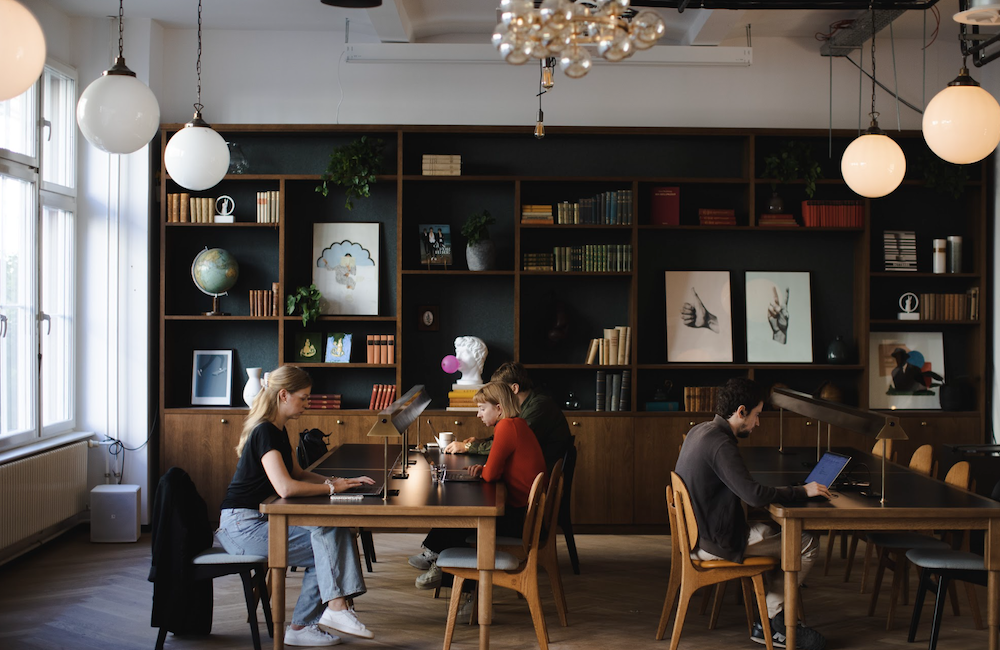
The office you expected to work in throughout your career, that familiar setup of assigned desks and clock-watching attendance policies, is giving way to something altogether more purposeful. What’s taking its place isn’t the fully remote model some predicted nor those friction-heavy return-to-office mandates that made headlines, but rather a smarter arrangement where physical workspaces actually earn your presence by delivering value that working from home simply cannot match.
Mindspace partnered with Civey to survey 2,000 employees working in hybrid arrangements between October and November 2025, and the findings confirm just how dramatically expectations have evolved. The headline number alone tells a compelling story: 22.8% of respondents said they would accept a pay cut of up to 20% for a significantly nicer and healthier workspace. Breaking that down further, 17.9% would sacrifice 5% of their salary while 5% would give up an even larger portion of their income. When talented people voluntarily trade compensation for better surroundings, workplace quality has clearly moved from facilities afterthought to genuine competitive advantage.
The Shift from Routine to Intentional Collaboration

Traditional office logic was straightforward enough: show up at nine, leave at five, and managers measured commitment through visibility rather than output. If this sounds like a model past its expiration date, you’re right. The study reveals what employees actually want their office to be, and it’s not simply a place to occupy a desk.
For the majority of respondents, the office of the future is primarily a place for concentrated work, with 58.5% citing this as its core function. Creative processes follow at 46%, while 35% view it as a space for belonging and connection. Another 26.7% see it as an optional meeting place, and 16.2% value it as somewhere for encounters and culture. The office of the future is not an end in itself, the data suggests, but a place of performance where specific types of valuable work happen.
So what does this mean for how you bring people together? Mandatory desk time is done. Your teams come in when being in the same room actually makes the work better, whether that’s hashing out ideas that need real-time energy, strengthening relationships that carry you through tough projects, or tackling creative challenges that just fall flat over video calls.
Why The Office is Becoming a Strategic Tool for Human Connection
Culture is one of those things everyone agrees matters but nobody can quite pin down with numbers. You know it when you feel it, and you definitely know when it’s gone. The study surfaces some fascinating generational differences in what people want from shared workspace, and these create real headaches if you’re trying to design for everyone.
Workers under 30 and those aged 40 to 49 want completely different things. The older group sees the office primarily as a place for belonging, with 44.7% prioritizing this versus just 20.3% of younger workers. Flip it around, and employees under 30 are far more likely to view office space as somewhere for recreation and inspiration, at 17.6% compared to only 4.2% among their older colleagues.
One office that works for everyone? That’s the challenge. You need flexible concepts meeting different needs under the same roof. If your workforce spans generations, cookie-cutter solutions won’t cut it.

Building Culture Through Intentional Gathering
Mentorship has taken a real hit from remote work. That informal knowledge transfer happening naturally when junior and senior people sat near each other has largely vanished from hybrid setups. Watching a seasoned colleague handle a tricky client situation teaches you things no training deck ever could, because real professional judgment happens in hundreds of tiny decisions experts make without even realizing they’re teaching anything.
The connection data throws up some patterns worth paying attention to. Only 10% of managers feel connected to their company when working from home, compared to 17% of non-managers. And here’s a surprising one: 7.9% of divorced employees feel least connected when remote and most connected in the office, significantly more so than single or married colleagues. Where you work clearly plays into belonging in ways that vary based on personal circumstances.
Team events show gendered differences too, with 20% of women feeling connected through such activities compared to 30% of men.
Complex Decisions Need Shared Space
Some work genuinely needs the bandwidth you only get face to face. Strategic planning works better when you can read the room and build consensus through those subtle real-time negotiations that video flattens. Difficult conversations about people are easier to handle with nuance when you’re sitting across from someone. Cross-functional problem solving speeds up when your team can grab a whiteboard, split into small groups, and come back together with sharper thinking.
The study backs this up. Your people need spaces supporting deep individual focus alongside areas built for creative collision and spontaneous exchange. Getting this balance right is what separates workplaces that pull people in from ones they avoid.
Employee-Centric Workplace Design Priorities
Office design used to be about cramming maximum headcount into minimum square footage on the assumption people would show up regardless because they had no choice. Hybrid work blew that assumption apart. Your people now have genuine options about where they spend their time, which means your office is competing directly with home setups for their presence.
The research confirms workspace quality now genuinely sways employment decisions. A striking 42.7% of respondents say office design has a strong or very strong influence on which company they choose. In the talent war, your space is a weapon.
Creating Environments That Actually Work
Productive work needs healthy, functional conditions. Full stop. The study lays out what your people actually care about. Ergonomic, healthy furnishings top the list at 35.2%, with quiet areas for concentration right behind at 34.5%. Natural light and good lighting come in at 31.9%, decent acoustics at 21.4%, and plants creating a homely feel at 21.2%. Inspiring interior design registers at just 11.1%, with flexible room concepts at 10.5%.
Design matters, but it’s no substitute for ergonomics, quiet zones, and proper lighting. These basics are standard in professional flex offices but often get overlooked in traditional workplace planning obsessed with aesthetics over function. A stunning space photographing beautifully for your careers page means nothing if people can’t find a quiet corner to think or conduct a client call without echo drowning them out.
Natural Elements and Physical Comfort
Biophilic design has graduated from trend to genuine priority. Humans respond to plants, natural light, wood, stone, and organic textures because we evolved surrounded by them. Beyond looking good, daylight exposure regulates your sleep patterns and sharpens your thinking, making window access a functional concern rather than just a pleasant bonus.
Accommodating different working styles matters too, especially when you consider that open-plan setups energising some people actively drain others. The strong survey showing for quiet areas and acoustic quality confirms variety is essential. Your team needs spaces calibrated for different tasks so they can match their environment to what they’re actually trying to accomplish.
Extra Office Amenities That Really Make a Difference
Workplace experience extends well beyond your building’s walls. The study asked what nearby services would improve daily life, and the answers reveal how much context matters. Good public transport tops the list at 47.5%, followed by restaurants, cafés, and takeaway at 29%, shopping like supermarkets at 28.8%, and green spaces like parks at 22.9%.
Bike parking and e-charging stations matter to 14.9%, gym and sports facilities to 14.3%, services like dry cleaners and hairdressers to 11.9%, nearby childcare to 10.2%, social spots and after-work activities to 8.7%, and wellness facilities to 8%.
Gen Z expectations look quite different from these averages. Young workers want fitness nearby at 31.6% versus 14.3% overall. Wellness amenities like massage and spa appeal to 25.7% of Gen Z compared to just 8% across all ages. Even hairdressers show a gap, with 23.8% of young workers wanting this versus 11.9% overall.
For Gen Z, the office is becoming a hub where work, daily life, and wellbeing blend together naturally. Mixed-use concepts addressing these expectations aren’t a nice extra anymore. They may well be the future of workplace design.
Who’s Willing to Trade Salary for Better Workspace?
The pay cut data varies meaningfully across groups beyond just age. Among people with children at home, 26% would accept lower pay for better workspace compared to 21% of those without kids. Senior executives show even stronger willingness, with 29% prepared to trade salary for improved conditions.
These patterns suggest workspace quality resonates across career stages and life situations, though the reasons differ. Parents might value efficiency and proximity to childcare that helps them juggle responsibilities. Executives may recognise how their environment affects their ability to lead and maintain culture. Whatever the driver, the willingness to invest personal income in better surroundings sends a clear signal about what your people actually value.
Technology and AI Integration in Offices in 2026
The 2026 office runs on intelligent systems managing climate, lighting, and space allocation based on real usage rather than rigid schedules ignoring what actually happens. Sensors track occupancy and conditions throughout the day, feeding systems adjusting settings based on who’s actually there.
Booking platforms have evolved into smart systems learning your organisational patterns, suggesting spaces based on historical usage and flagging inefficiencies needing attention. As AI handles more routine cognitive tasks, human work shifts toward judgment, creativity, and relationship building. Your physical space increasingly needs to support these distinctly human activities rather than providing desk rows for processing work people could do anywhere.
Real estate ranks among your biggest fixed costs, yet space decisions have historically run on gut feel rather than rigorous analysis of actual usage. Sensors and analytics now bring discipline to these choices, often revealing uncomfortable gaps between theoretical capacity and what’s really happening.
Sustainability as a Baseline
Environmental performance has shifted from bonus features to basic expectations. Employees want responsible employers. Customers scrutinise sustainability. Investors evaluate ESG profiles. Regulators enforce tightening standards. Efficient systems and low-carbon materials no longer differentiate because they’ve become the minimum stakeholders assume.
Good news: sustainability and employee experience often align. Biophilic design improves both environmental performance and satisfaction. Natural ventilation cuts energy demands while creating nicer environments. Green certifications signal values mattering to talent, customers, and investors alike.
Emerging Workplace Models
Traditional headquarters assumed daily commutes to single locations, but hybrid patterns have accelerated that model’s slide into irrelevance.
Managed and Flex Offices
Office-as-a-Service has gained serious traction because conventional leases create problems for organisations navigating uncertainty. Traditional setups lock you into long-term commitments regardless of how your needs evolve.
The study puts it plainly: traditional, rigid office concepts are reaching their limits. What’s needed are flexible environments combining different needs and enabling productive work, which is exactly where modern flex solutions come in. Providers like Mindspace deliver managed spaces where you pay for actual usage, with meeting rooms, amenities, and programming bundled into arrangements scaling as your needs change.

Distributed Hub Networks
“Work from an office” is replacing “work from the office.” Your people expect a professional workspace near wherever they happen to be, picking locations based on what each day requires, whether that’s the spot nearest home for focused work, a hub near clients for meetings, or central offices when colleagues need face time.
What Success Looks Like for New Workspaces
Measuring office performance through occupancy numbers misses the point when the purpose of physical workspace has shifted from housing daily work to enabling high-value interactions. A packed building full of people doing tasks they could handle from home delivers far less than a half-empty space generating genuine collaboration every time someone walks through the door.
The study confirms employees expect flexible, high-quality environments combining productivity, wellbeing, and community. Traditional solutions are hitting their limits in delivering this.
Organisations treating office design as an expense to minimise will struggle in talent markets where 42.7% of workers say workspace strongly influences employer choice. The 2026 office, built intentionally around human connection and work genuinely benefiting from presence, becomes a powerful lever for culture, collaboration, and keeping your best people.
Mindspace offers exactly the kind of working environment modern companies and their people are looking for, combining the flexibility, quality, and community the data shows you actually want.
How Mindspace Delivers What Modern Workforces Actually Need
Everything this study reveals about employee expectations, from the demand for ergonomic, healthy environments to the need for flexible spaces serving different work styles, points toward a workplace model that traditional offices struggle to deliver. Mindspace was built around exactly these principles.
With more than 45 locations across 20 cities in Europe and the US, Mindspace combines a global footprint with local character. Each space is individually designed rather than stamped from a corporate template, blending high-quality furnishings, natural light, biophilic elements, and the acoustic engineering that survey respondents ranked so highly. The quiet zones, collaboration areas, and flexible room concepts the data says your people want? They’re standard here, not optional extras bolted on as an afterthought.
Beyond the physical space, Mindspace provides the community layer that builds belonging and connection. A dedicated team at each location manages everything from daily operations to regular networking events. For Gen Z workers expecting wellness amenities and lifestyle integration, many locations sit within mixed-use developments offering the gyms, cafés, and services young talent increasingly demands.
The flex model itself addresses what the study makes plain about rigid office concepts reaching their limits. Whether you need private offices for an established team, coworking memberships for mobile workers, or coworking day passes to provide an extra choice for your team when they need a day out of the house, Mindspace scales with you.
If the research tells us that 42.7% of employees factor workspace heavily into employer choice, and nearly a quarter would trade salary for better surroundings, the question becomes straightforward: does your current setup compete? Mindspace exists for organisations ready to turn their workspace into the talent advantage the data shows it can be.
The Author

You might also like these reads — picked just for you.

Rent Office Space by the Day in NYC: Without the Lease, the Overhead, or the Compromise
Picture a Tuesday. You have a client pitch at 11, two discovery calls before lunch, and a three-hour working session with a designer in the afternoon. You live in Queens. The client is flying in from Chicago. A coffee shop gets you there for the calls and loses you for the pitch. Your apartment works […]

How to Build a Hybrid Work Schedule That Actually Works
Someone is staring at a blank calendar right now with a hybrid policy sitting open in another tab. The policy says three days in the office, two remote. It does not say which three. It does not say how to run a Tuesday that starts with a client call from home and ends with a […]

Best Coworking Spaces in New York City (2026)
New York has the densest concentration of coworking spaces of any US city, the widest range of price points, and the most varied set of neighbourhood ecosystems attached to any of it. Picking the wrong one is costly, and rent contributes with a small portion to that cost. The wrong space wastes two hours a […]
