

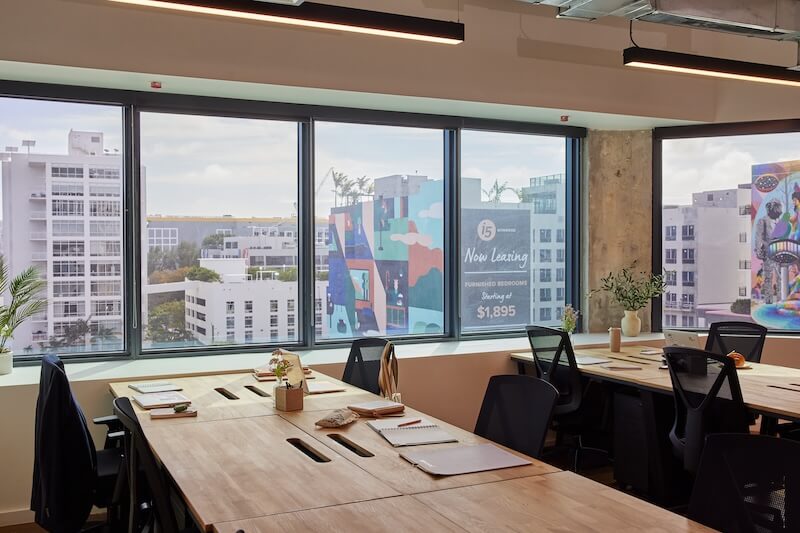
Not that long ago, calling Miami a “tech city” would have gotten you laughed out of any serious founder gathering in San Francisco. That’s no longer the case. The city has quietly, and then not so quietly, turned itself into a main destination for venture capital, engineering talent, and startup culture that rivals what you’d find on either coast. Founders and their teams have been relocating from New York and the Bay Area, bringing with them a new way of working that doesn’t go along with the old real estate playbook.
Most people think this shift is just about warm weather and tax breaks. It’s not. The real change is in how these companies use space. Demand for coworking among Miami’s tech companies surged 143% compared to pre-pandemic levels. The city’s tech sector is growing jobs at roughly 22% year over year. Those numbers tell you that flexible offices are now the core infrastructure in Miami. Five-to-ten-year leases, the kind Silicon Valley once normalized, feel absurd when your product roadmap changes every quarter and your headcount could double after a single funding round.
What Flexible Offices Mean for Tech Companies vs. Traditional Industries
For tech companies, flexible offices are a perk they rely on. These are deployment-ready environments where engineering teams deliver code on day one, without delays tied to setup. Product teams scale from five to fifty without renegotiating leases. Startups restructure or shift direction without being anchored to a space that no longer fits.

Traditional leases were built for a different reality. Industries like finance or law operate on predictable headcount and stable growth. Space planning happens years in advance. Fixed square footage and long-term commitments make sense in that context.
Tech companies are breaking that model. Flexible offices reflect that shift, turning workspace into a relevant need. The advantage lies in flexibility and alignment with the modern ways these companies operate.
The Financial Math That Tech CFOs Can’t Argue With
Money talks, especially at startups where every dollar requires reasoning. The average annual savings from choosing flexible office space over a traditional lease is roughly $70,000. That’s not a small cost for a pre-revenue company measuring survival in months, not years. Redirect that money toward hiring another engineer or covering cloud computing costs, and suddenly, workspace becomes a growth strategy.
The cost advantage deepens when you factor in Miami’s position as the fifth-highest discount market for flexible offices nationally. For founders relocating from San Francisco or New York, the math becomes persuasive. You’re looking at roughly 61% lower costs compared to a conventional 2,000 square foot lease. That makes Miami competitive with Austin and Denver for tech teams closely watching their burn rate. Unlike those cities, Miami gives you a direct gateway to Latin American markets, which is a selling point that no spreadsheet fully captures.
Operational Agility That Matches How Tech Companies Grow
Talk to any founder who’s gone through a Series A, and they’ll tell you the same story. The round closes, the hiring plan kicks in, and suddenly you need twice the desks you had last month. With a traditional lease, you’re stuck waiting on landlord approvals, contractor timelines, and permit processes that move at government speed. In a flexible office, you call your provider on Monday and your new team members sit down on Wednesday. That responsiveness matters more than most people outside the startup world realize.
Scaling Engineering Teams Without Real Estate Friction
Engineering teams are hard to hire for and equally hard to retain if their work environment doesn’t feel like a priority. When a company closes a funding round and goes on a hiring spree, expectations shift fast. The last thing a CTO wants is to tell new hires they’ll be crammed into a makeshift overflow room while the landlord finishes construction next door. Flexible offices eliminate that friction. Need ten more seats? Done. Need a dedicated room for your DevOps team? Handled. The right office amenities and workspace design make these transitions seamless for growing teams.
Supporting Distributed Tech Talent Models
Many Miami tech companies don’t keep all their engineers in one place. Distributed teams are now the norm. But distributed doesn’t mean “never meet in person.” Quarterly on-sites, sprint planning weeks, and team retreats – all of these require physical space. Committing to permanent offices in five different cities to accommodate occasional gatherings is financial recklessness. That’s why satellite offices through flexible providers have become so popular. Companies spin up hubs exactly when they need them and walk away when they don’t.
Pivoting Without Real Estate Anchors
Founders dread pivot conversations because they admit the product thesis failed. Fixed office space locks shrinking teams into costly leases. Flexible offices remove this constraint. Teams scale space down or up in 1–30 days. The office adapts to the business.
Mindspace: Where Miami’s Tech Companies Actually Work
Mindspace operates two Miami locations, each attracting a distinctly different part of the tech ecosystem, and that’s intentional. Both locations serve different purposes, which we’ll explain below:
Mindspace Downtown Miami: Where Fintech and Enterprise SaaS Build

Downtown Miami attracts companies that need to look serious for a living. Fintech startups pitching banking partnerships, SaaS companies closing enterprise deals, or crypto firms that want financial district credibility rather than Wynwood cool. The location puts you minutes from the institutions that matter for these businesses. When your biggest client is a bank, working from a building surrounded by banks sends a message that no amount of clever branding can replicate. The private offices here are designed for teams that need both focus and prestige.
Mindspace Wynwood: Product Teams and Dev Shops

Mindspace Wynwood is a different player. This is where product-focused startups, creative tech agencies, and developer shops meet. The vibe leans collaborative over corporate, and the companies here tend to prioritize building great products over impressing suits in conference rooms. If Downtown Miami is where you go to close deals, Wynwood is where you go to build things worth selling. From dedicated desks to full private suites, the space flexes to match how your team prefers to work.
Tech Infrastructure That Delivers
Both locations offer what tech teams need and what generic office spaces get wrong. We’re talking about an internet that handles forty engineers pushing code, meeting room tech that doesn’t require an IT degree to operate, and workspace design that supports deep focus rather than the open-plan chaos that drove half of Silicon Valley to work from coffee shops. A coworking space that can’t handle a video call with a client in Tokyo isn’t a workspace, but a cost that leads to unwanted outcomes.
The Networking Effect That Accelerates Tech Companies
Around 79% of coworking members report expanded professional networks. That’s a nice statistic, but for tech founders in Miami, the implications run deeper than casual LinkedIn connections. Say your lead engineer grabs coffee in the communal kitchen and starts talking to someone who turns out to be the exact backend specialist you’ve been trying to recruit for six months. Or a SaaS founder overhears a conversation about pain points from an enterprise buyer in the company next door and realizes they already have the solution.
These aren’t hypothetical scenarios. They happen constantly in coworking environments, and venture capitalists know it. Firms like Founders Fund and Atomic maintain an active presence in coworking neighborhoods because deal flow naturally concentrates where startups work. A VC partner at a coworking floor in Wynwood will encounter more fundable companies in an afternoon than they would at a traditional networking dinner. The ecosystem feeds on proximity, and collaborative workspaces create exactly that density.
Government Backing Specifically for Tech Startups in Flexible Spaces
The Miami Downtown Development Authority runs a grant program that offers up to $25,000 for qualifying tech startups. The eligibility criteria are strict: recipients need to lease coworking or approved flexible office space within the DDA district and get a recommendation from one of the DDA’s startup partners. In other words, the city government supports the idea that tech growth is happening in flexible offices and structured its incentive programs accordingly.
The DDA’s program specifically targets tech companies choosing coworking environments because they understand that supporting flexible workspace infrastructure means supporting the entire tech ecosystem. For a pre-seed founder counting every dollar, a $25,000 grant that covers several months of workspace costs can be the difference between reaching product-market fit and running out of money.
Why Traditional Leases Don’t Work for Modern Tech Companies
Walk through a few scenarios that any tech founder will recognize. Your startup just raised a Series A, and you need 30 desks immediately because the people you’ve been trying to hire for months all accepted their offers in the same week. A traditional lease means a three-month build-out at minimum. By the time the space is ready, your new engineers have either found another job or they’ve been working from their apartments, disconnected from the team and the culture.
Or consider the company that pivots from B2C to B2B and suddenly needs 40% fewer people. With a conventional five-year lease, you’re still paying for ghost desks. That money comes straight out of your runway, the same runway your investors are watching closely.
Then there’s the distributed team problem. You’re hiring across Miami, Austin, New York, and Denver. Signing separate leases in four cities, each with its own broker, landlord, and headaches, ties up capital in underused space across the country. Flexible offices collapse that complexity into a single provider who operates in multiple markets. It’s the difference between managing four separate real estate portfolios and managing one account. If you’re weighing those options, it helps to understand what a shared office space involves before making any commitments.
Miami’s Tech Neighborhoods and Where Companies Choose to Build
Miami offers two main neighborhoods where companies choose to be present. The situation changes daily, as the city attracts even more tech companies. The choice often goes beyond Brickell and Wynwood, as more corners gain the same traction, building their tech identity.
Brickell: Fintech, Crypto, and Enterprise Tech
Brickell is Miami’s financial heartbeat, and the tech companies here reflect that. Fintech firms, crypto companies, and enterprise SaaS businesses gravitate toward Brickell because proximity to banking institutions matters for their credibility and client base. When your product integrates with major financial services, being located three blocks from your biggest potential customer’s headquarters is a strategy, not a coincidence.
Wynwood: Product Studios and Dev Shops
Wynwood attracts the builders. Product studios, creative agencies, and developer-focused startups choose this neighborhood because the energy favors creating over selling. The collaborative atmosphere here is genuine, not manufactured, and it draws talents that care more about the quality of the codebase than the view from the conference room.
Emerging Tech Corridors
Not every startup has Brickell money or Wynwood ambitions. New tech corridors in Miami offer a clear cost advantage. For remote-first teams, the logic is simple: spend on talent, not on a prestigious address. This pragmatism is what’s actually building Miami’s next ecosystem. For companies exploring their first flex space, understanding the different office hoteling models can help narrow down the right fit.
What Miami’s Flexible Office Surge Means for the Tech Ecosystem
Zoom out for a moment and think about what happens when a critical mass of tech companies clusters in flexible office environments. You get density. And density creates the conditions that separate real tech hubs from cities that merely have tech companies. Engineers move between startups because the next opportunity is down the hall. Investors pay more attention because the deal flow is concentrated. Technical conversations happen spontaneously in shared spaces, leading to collaborations that would never emerge from cold outreach.
Miami’s 143% surge in coworking demand among tech companies is evidence that the city is building infrastructure that makes talent want to stay and newcomers want to relocate. Traditional leases create isolation. When tech companies are siloed, you lose the spontaneous interactions that actually drive a city’s ecosystem. It’s inefficient for engineers and a logistical headache for investors. Miami’s bet on flexible offices is, whether the city planned it this way or not, a bet on ecosystem density. And so far, it’s paying off.
FAQs
How much runway do flexible offices save for pre-revenue tech startups?
The average savings are around $70,000 per year compared to a conventional lease. For a startup burning through cash at a predictable rate, that can translate to two or three extra months of runway, enough time to hit a critical milestone or close the next round of funding.
Can engineering teams of 20+ work effectively in flexible office environments?
Yes, and it’s more common than you’d think. Modern flexible offices are built to support exactly this kind of team. Dedicated floors, private suites, and configurable layouts mean a 20-person engineering team can have the same level of focus and collaboration they’d get in a private office, without the multi-year commitment.
What tech infrastructure do Mindspace locations provide beyond basic internet?
Both Miami locations offer enterprise-grade connectivity, professional meeting room technology, and workspace configurations designed for engineering workflows. Think: reliable video conferencing with overseas teams, bandwidth that supports continuous deployment pipelines, and quiet zones for deep work.
How do Miami’s tech-focused flexible offices compare to WeWork or generic coworking?
Generic coworking serves everyone, which means it’s optimized for no one in particular. Tech-focused flexible offices like Mindspace design their infrastructure, their community programming, and their physical spaces around the specific needs of technology companies. The difference shows up in everything from internet reliability to the caliber of companies in the building.
Do venture capital firms source deals from coworking spaces?
Yes. Several prominent firms maintain active presences in Miami’s coworking neighborhoods specifically because startups concentrate there. Deal flow follows founders, and founders increasingly work from flexible offices. VCs have adapted accordingly.
The Author

You might also like these reads — picked just for you.
Mindspace Gendarmenmarkt: A New Workspace in the Heart of Berlin
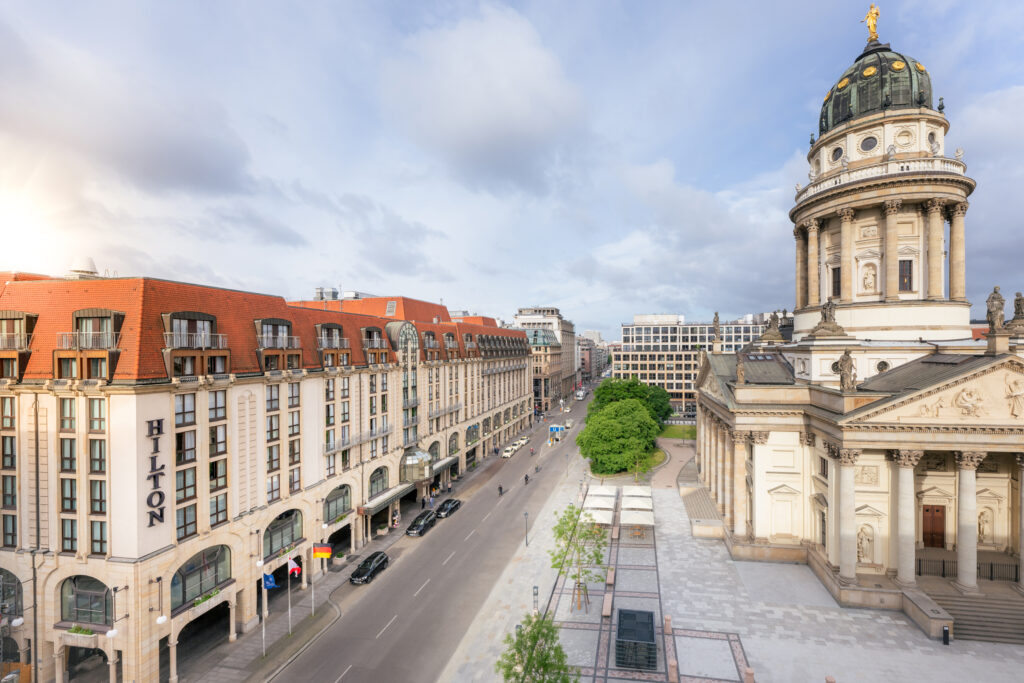
Discover Mindspace Gendarmenmarkt, a flexible workspace in central Berlin combining premium design, convenience, and a prime location. Mindspace Gendarmenmarkt brings a fresh kind of workspace to central Berlin: design-led, flexible, and positioned in one of the city’s most recognizable locations. Set inside Hilton Berlin on Gendarmenmarkt, the space combines a prestigious business address with a […]

Coworking Etiquette: Easy Rules to Make the Most of Coworking Space
You left your old office because the politics were exhausting, the commute was soul-crushing, and the fluorescent lights made everyone look slightly ill. So you joined a coworking space. Fresh start. New energy. Except now the guy three desks over has been on a personal call for an hour, someone microwaved fish in the kitchen, […]

Most Wanted New York Workspace Amenities in 2026
Nobody moves to New York because it’s easy. You move here because something about the chaos feels worth it. But let’s be honest about what the chaos costs on a Tuesday morning: the L train stalls somewhere under the East River, your laptop bag weighs eleven pounds, and the coffee shop on Bedford Avenue has […]
