


The traditional 9-to-5 office model no longer fits how people actually want to work. Office flexibility has shifted from an experimental perk to a business necessity, transforming how companies attract talent, manage costs, and maintain productivity. When you give your workforce genuine flexibility in where, when, and how they work, you’re fundamentally rethinking what productive work looks like in the modern era.
What Is Office Flexibility?
Office flexibility refers to the ability for employees to choose where, when, and how they work. This includes remote work, flexible hours, hybrid schedules, and shared workspaces. Companies use office flexibility to improve productivity, reduce overhead costs, and increase employee satisfaction.
Core Components of Flexible Work Arrangements
Office flexibility encompasses the freedom to choose where you work, when you work, and how you structure your workday. At its core, flexible work arrangements recognize that productivity doesn’t require everyone sitting in the same office during identical hours. You might work from home on Mondays, use a coworking space near a client site on Tuesdays, and collaborate from headquarters on Wednesdays.
The key components include location flexibility (choosing your work environment), schedule flexibility (adjusting your working hours), and role flexibility (adapting how tasks get accomplished). These elements combine to create systems where your actual output matters more than your physical presence.
Evolution of Workplace Flexibility Models
Workplace flexibility evolved gradually from rigid office requirements toward increasingly adaptive models. Early initiatives focused primarily on part-time work or compressed workweeks. The rise of reliable internet connectivity and cloud-based tools enabled remote work to become technically feasible.
The pandemic accelerated decades of gradual change into months of forced experimentation. Companies that previously viewed remote work as impossible discovered their teams remained productive from home, and the adoption of this process doesn’t show any signs of slowing down in the future. The post-pandemic model combines the best elements of remote and office work, acknowledging that different work modes serve different purposes.
Types of Office Flexibility Arrangements: Mindspace’s flexible offices
Hybrid Offices
Hybrid offices blend remote work with scheduled office time, giving you the benefits of both autonomy and collaboration. You might work from home three days weekly and use office space for the remaining two, timing your office presence to align with team meetings and collaborative projects.
Mindspace’s Hybrid Office solution lets your team share a private space with built-in flexibility. You can book desks by the day, week, or month, with access to meeting rooms, common areas, and all the essentials. Your team can rotate in and out as needed without paying for unused space, reducing commuting time and costs while maintaining relationship building and collaboration.
Hot Desking and Activity-Based Working
Hot desking eliminates assigned seating, letting you choose any available workspace when you arrive. Activity-based working extends this further: you select spaces designed for your current task. Need to focus? Choose a quiet zone. Running a brainstorming session? Grab a collaborative area. Taking video calls? Use a private booth.
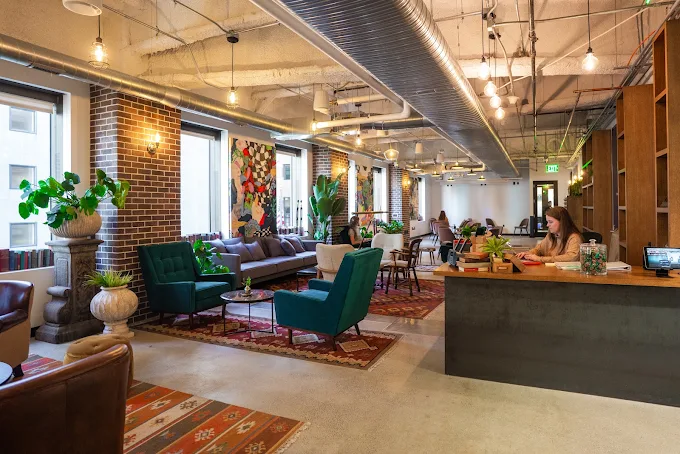
Mindspace locations implement activity-based working through carefully designed zones that serve distinct purposes. The flexibility to move based on what you’re doing recognizes that you perform multiple different activities that benefit from different environmental support.
Coworking Spaces
Coworking spaces provide professional work environments without the commitments and costs of traditional office leases. You gain immediate access to fully equipped offices, meeting rooms, high-speed internet, and professional amenities without capital expenditure on furniture and infrastructure.
Beyond physical workspace, quality coworking environments cultivate community and networking opportunities. Mindspace coworking spaces emphasize both the practical infrastructure that enables productive work and the community development that transforms isolated workers into connected professionals. With options like Coworking Day Pass and Coworking Dedicated Desk, you can scale usage based on your needs.

Miami Downtown Flexible Office Space
Benefits of Office Flexibility for Employees
Improved Work-Life Balance
Office flexibility dramatically improves work-life balance by eliminating artificial boundaries between professional and personal responsibilities. You can attend your child’s school event at 2 PM and complete your work later. The morning commute time becomes available for exercise, family breakfast, or simply starting work earlier and finishing sooner.
When you control when and where you work, you can align your schedule with your natural energy patterns. Early risers can capitalize on peak morning focus. Night owls aren’t forced into artificial productivity during slower morning hours. This autonomy creates genuine balance rather than perpetual juggling.
Increased Productivity and Focus
Flexible work arrangements often increase productivity by letting you optimize your environment for your tasks. When you need uninterrupted focus, you can work from a quiet home office rather than an open-plan office with constant distractions. When creative collaboration matters, you gather with colleagues in spaces designed for interaction.
The productivity gains also come from reduced cognitive burden around commuting and office politics. The mental energy previously spent on commuting becomes available for actual work. Flexibility lets you focus on outcomes rather than activities.
Reduced Commuting Stress and Costs
Commuting represents one of the most universally disliked aspects of traditional employment. Long commutes create stress, waste time, and incur significant costs without adding value to your actual work. Office flexibility dramatically reduces or eliminates this burden. The hours previously spent in traffic become available for work, rest, or personal activities.
You’re not starting each workday already exhausted from battling traffic. Weather doesn’t determine whether your commute becomes a nightmare. When you do commute for specific office days, the reduced frequency makes the experience more tolerable.
Enhanced Mental Health and Well-being
Office flexibility supports better mental health through multiple mechanisms. The autonomy itself creates psychological benefits: feeling in control of your time and environment reduces stress and increases job satisfaction. The ability to structure your day around your personal needs removes constant anxiety about managing competing demands.
When you’re having a difficult day, working from a comfortable home environment with your support systems nearby proves easier than forcing yourself into a busy office. The reduced pressure to maintain constant professional performance alleviates exhausting demands that many find draining.
Greater Autonomy and Job Satisfaction
Flexibility demonstrates trust in your professionalism and judgment. When employers focus on your output rather than monitoring your location and hours, they signal respect for your capability to manage your own work. This autonomy proves deeply satisfying: you’re treated as a responsible professional rather than requiring supervision.
You can adapt your work patterns to your current projects and energy levels. This control over your professional life creates genuine job satisfaction. People rarely leave jobs that offer this level of autonomy and trust.
What are the benefits of office flexibility for employers?
Access to Wider Talent Pools
Office flexibility expands your potential talent pool exponentially by removing geographic constraints. You can hire the best person for each role regardless of location. You can recruit from lower-cost regions, hire people with caregiving responsibilities, and attract established professionals who won’t relocate.
The flexibility itself becomes a recruiting advantage: many talented workers now consider workplace flexibility non-negotiable. Companies offering genuine flexibility gain competitive advantage in talent markets increasingly dominated by candidate preferences.
Reduced Real Estate and Operational Costs
Office flexibility delivers substantial cost savings through reduced real estate requirements. When your workforce doesn’t occupy desks simultaneously, you need dramatically less office space. A hybrid model where people average three office days weekly means you can support your team with 60% of the square footage traditional presence required.
These savings prove particularly significant in expensive urban markets. Many companies maintain smaller, higher-quality offices in prime locations rather than large, mediocre spaces. The reduced real estate commitment creates financial flexibility: you’re not locked into massive lease obligations that become burdensome if business conditions change.
Higher Employee Retention Rates
Employees who enjoy workplace flexibility demonstrate significantly higher retention rates than those subject to rigid requirements. The flexibility represents valuable compensation that doesn’t directly cost employers. People build their lives around flexible work arrangements, making job changes more disruptive.
Flexibility reduces the stress and burnout that drive people to quit. The autonomy creates loyalty through demonstrated trust. When competitors attempt to recruit your flexible workers, they must overcome not just salary but significant lifestyle benefits. The reduced turnover saves substantial costs in recruitment, onboarding, and lost productivity.

Flexible office space in San Francisco
Office Flexibility vs Traditional Office Models
| The What? | Flexible Office Models | Traditional Office Models |
|---|
| Productivity | Often equal or higher; flexibility boosts focus and efficiency by reducing commutes and distractions. | Relies on physical presence; productivity can drop due to office noise and rigid hours. |
| Cost & ROI | Cuts real estate and overhead costs by 30–60%; improves ROI through savings and talent access. | High fixed costs for rent, utilities, and maintenance; limited scalability. |
| Employee Satisfaction & Retention | Strongly preferred; flexibility ranks above pay for many workers, improving retention. | Lower satisfaction; rigid policies often increase turnover. |
| Environmental Impact | Reduces commuting and office energy use, lowering carbon footprint. | Higher emissions from commuting and constant building operation. |
Productivity Comparisons
Research consistently shows that flexible work arrangements maintain or improve productivity compared to traditional office models. When given flexibility, employees often work more efficiently by eliminating commute time, reducing workplace distractions, and optimizing their schedules around peak energy periods.
The productivity gains vary by role and individual, but aggregate data demonstrates that flexibility doesn’t harm output. Knowledge workers particularly benefit from autonomy over when and where they work, as their productivity depends more on focus and creativity than time physically present in offices.
Cost Analysis and ROI
The financial case for office flexibility proves compelling when you calculate total costs honestly. Traditional office models carry substantial overhead: real estate, utilities, equipment, supplies, maintenance. Flexible arrangements dramatically reduce these costs. Even accounting for investments in technology and home office support, net savings typically range from 30-60%.
The return on investment extends beyond direct cost savings. Reduced turnover saves recruitment and training costs. Access to wider talent pools often means better hires at lower salary premiums. Quality flexible workspace in premium locations often costs less than mediocre traditional offices while delivering better employee satisfaction.
Employee Satisfaction and Retention Differences
Employee satisfaction measures consistently show dramatic preferences for flexible work arrangements. Surveys repeatedly find that workplace flexibility ranks among employees’ top priorities, often exceeding compensation as a factor in job satisfaction.
The satisfaction differences translate directly to retention. Employees with flexibility rarely return voluntarily to rigid office requirements. Companies that attempt to mandate office returns after establishing flexibility typically face significant turnover, losing exactly the highly skilled workers they most want to retain.
Environmental Impact Considerations
Office flexibility delivers substantial environmental benefits through reduced commuting and office resource consumption. Fewer people traveling to centralized offices means lower carbon emissions. The environmental savings extend beyond commuting to include reduced office energy consumption, less waste generation, and decreased demand for office-related infrastructure.
Even accounting for increased home energy usage during work hours, the net environmental impact of flexibility remains strongly positive. Organizations prioritizing sustainability find workplace flexibility among their most effective carbon reduction strategies.
Frequently Asked Questions
Office flexibility adapts to most business types, though implementation approaches vary. Knowledge work (consulting, technology, finance, marketing, creative services) translates particularly well to flexible arrangements. Customer service, sales, and administrative functions also accommodate flexibility readily with appropriate technology support.
Manufacturing, healthcare, retail, and hospitality face more constraints since much work inherently requires physical presence. However, even these industries can implement flexibility for administrative functions, management roles, and support teams.
Successful office flexibility requires reliable technology infrastructure: robust internet connectivity, cloud-based collaboration tools, video conferencing platforms, and secure file sharing systems. These tools enable communication and coordination without requiring physical proximity.
Beyond technology, flexibility requires clear communication protocols and expectations. Mindspace locations provide the physical infrastructure that supports flexibility: professional environments with meeting rooms, reliable connectivity, and collaborative spaces.
The ideal hybrid ratio varies by team, role, and individual rather than following universal rules. Many organizations default to 2-3 office days weekly with remaining days remote, finding this balance maintains connection while preserving flexibility’s benefits.
More sophisticated approaches let teams determine their own patterns based on project phases, deadlines, and collaboration requirements. Organizations succeeding with hybrid models typically set minimum office presence requirements but otherwise trust teams to optimize their own schedules.
Office flexibility proves among the most effective retention tools available to employers. Data consistently shows that employees with workplace flexibility demonstrate significantly lower turnover than those subjected to rigid office requirements.
The retention effect proves particularly strong for parents, caregivers, and employees with long commutes. People build their lives around flexible work arrangements, making job changes far more disruptive than when work merely meant showing up at an office.
Small businesses often implement flexibility more easily than large organizations since they lack entrenched bureaucracies resisting change. Start by identifying roles that don’t genuinely require fixed office presence. Experiment with specific arrangements like remote Fridays before committing to comprehensive changes.
Small businesses can leverage coworking spaces like Mindspace to maintain professional environments without traditional office lease commitments. You gain flexibility to scale space usage based on actual needs. Cloud-based tools offer enterprise capabilities at small business prices.
Ready to embrace office flexibility with premium workspace solutions? Mindspace offers the infrastructure that makes flexibility work: professional environments when you need office presence, collaborative spaces for team gatherings, and comprehensive amenities without the commitments of traditional leases.
Explore our flexible workspace solutions to discover how we support your transition to modern work arrangements>> Book a tour now!.
The Author

You might also like these reads — picked just for you.

Why AI Companies in London Are Choosing Flexible Workspace
AI companies signed a record 565,000 square feet of London office space in the first four months of 2026, with another 288,000 square feet under offer. That already exceeds the 211,000 square feet AI firms took across the whole of 2025. The exact figures vary by source, but the trend is clear: London’s AI market […]
Why Move-In Ready Workspaces in San Francisco Are Winning in 2026
San Francisco’s office market is booming by one metric and nearly 32% empty by another. Both are happening right now. As the SF Standard’s Q2 2026 report says, landlords experience the biggest competition volume since the pandemic, but at the same time, they have not seen this much sit empty. CBRE’s Alexis Walsh highlighted the […]

Best Office Space for Rent in NYC: Best Coworking and Commercial Offices
New York City has the densest concentration of coworking spaces in the United States and the widest price range of any market in the country. A hot desk at a members’ club in SoHo can cost more than a private office in most other cities. A private studio for four on the Williamsburg waterfront costs […]
