

San Francisco’s office market is booming by one metric and nearly 32% empty by another. Both are happening right now. As the SF Standard’s Q2 2026 report says, landlords experience the biggest competition volume since the pandemic, but at the same time, they have not seen this much sit empty.
CBRE’s Alexis Walsh highlighted the main trend in the SF Standard: top landlords succeed by prepping move-in ready offices before tenants even visit. AI startups “need to be in tomorrow,” they said, and a six-month buildout does not fit that schedule.

This guide covers what move-in ready really means, why the AI hyper-growth wave has reshaped the market, how long construction timelines have become a competitive liability, and where the hottest micro-markets sit right now.
What Move-In Ready Really Means (and Why It Matters)
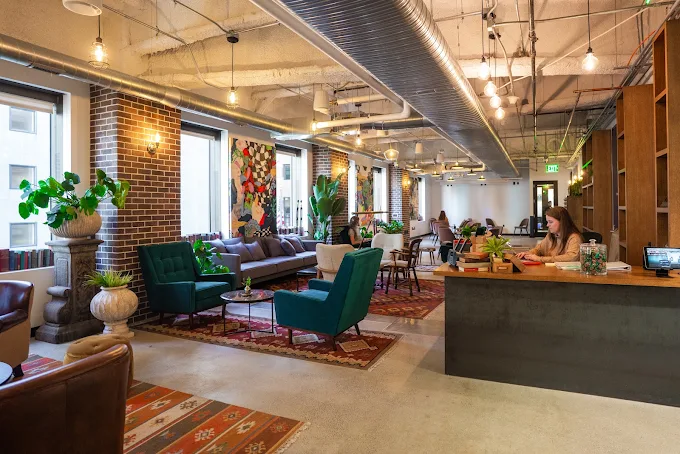
Move-in ready means the space is fully built out, furnished, wired, and operational before a tenant tours it. Desks are in place. Meeting rooms are booked-ready. Internet is running at gigabit. Coffee is on the counter. The tenant walks in on a Monday, sets up laptops, and starts working. No architect, no contractor, no permitting timeline, no capital sunk into a fit-out that takes months to complete.
Traditional leases require you to sign first, then handle design, permits, construction, and furnishing. In San Francisco, that fit-out process typically takes three to nine months depending on the scope. During that time, the tenant is paying rent on space they cannot use, or bridging with expensive short-term arrangements, or losing hires who join and have nowhere to sit.
Move-in ready removes that friction. For an AI startup on a hiring plan that adds fifty people this quarter, the question is not whether the space is beautiful, but whether it works on Monday. A flexible private office in San Francisco answers the Monday question with a ready-to-work setting and included amenities, something that traditional lease won’t ever provide.
Why Are Move-In Ready Workspaces Winning in San Francisco?
AI and tech companies are hiring and scaling too fast to wait months for a traditional buildout. In a market divided like this, space quality dictates deal speed as much as location. Kidder Mathews reported 3.4 million square feet leased in Q1 2026 with zero square feet under construction. Supply is not being replaced. The scarce commodity is space you can occupy immediately.
Why Traditional Leases Don’t Fit the Moment
A traditional San Francisco office lease locks a tenant into five to ten years contracts, requires $100 to $250 per square foot of buildout capital, and imposes a construction timeline that no AI founder closing a Series B this month has time for. Long leases force you to forecast hiring far into the future. For high-growth startups whose headcount can double in a single quarter, that is rarely realistic. Anthropic went from around 18,000 square feet in Jackson Square in 2022 to roughly 1 million square feet across the Howard Street corridor by mid-2026. Almost no lease structure survives that kind of growth curve intact.
Key Factors Driving Demand for Move-In Ready Offices
Move-in ready offices are in demand because AI firms want to move quickly, avoid heavy buildout costs, and place teams in high-amenity spaces close to the market’s strongest submarkets. Fast-growing tenants are concentrating in prime locations this year, so flexible, turnkey offices are the best way to attract them.
The AI Acceleration
AI companies drove most of San Francisco’s office leasing in Q1 2026. OpenAI expanded its Mission Bay presence with 222,000 square feet, bringing its city-wide footprint to 1 million square feet. Within weeks, Anthropic snapped up 590,000 square feet of office space across three buildings on Howard Street. Databricks expanded at 1 Sansome. Perplexity relocated to 181 Fremont. The pace of these deals rewards buildings that can transact fast.
Avoidance of Capital Expenditures
Buildout capital is capital that does not fund product, hiring, or GTM. For a VC-funded AI startup guarding its cash runway, a move-in ready office saves millions in upfront costs. Investors reading the monthly board deck notice and reward.
Hospitality-Driven Amenities
The best-performing flexible office operators run more like boutique hotels than office landlords. To attract AI and tech tenants today, coffee bars, wellness studios, event spaces, and full-time staff are basic requirements. That standard used to be a differentiator. In 2026, it is the baseline.
How is the AI Boom Affecting San Francisco Office Space?
The AI boom is pushing San Francisco office demand toward move-in ready space because fast-growing companies need desks, meeting rooms, and infrastructure immediately. It is also absorbing sublease inventory, as major AI tenants convert temporary space into longer-term commitments and tighten the market.
Rapid Hiring and Immediate Infrastructure Needs
AI companies at Series B and beyond are running hiring plans that add hundreds of engineers within twelve months. Such expansion requires desks, meeting rooms, phone booths, and infrastructure ready on the day the offers close, not the day the fit-out finishes. Move-in ready space is the only real answer.
Sublease Inventory Absorption
The AI wave has also drawn down the sublease overhang that defined the San Francisco market from 2022 to 2024. Cushman & Wakefield reported the first half of 2026 as the strongest new leasing since 2000, with market-ready furnished space driving the pace. That kind of conversion is a signal of significant market switch. Space that was on the market with a six-month asterisk is now being locked down long-term.
Which San Francisco Neighborhoods are Best for Move-in-Ready Workspaces?
Howard Street between Second and Fremont is now nicknamed AI Alley. To be at the heart of the AI ecosystem, that block is the place to be. Foundry Square especially has been transformed by all this activity.
Market Street is the other submarket leading the race. Market Street sits right on the border of the Financial District and SoMa, putting Montgomery Street BART and MUNI right at your doorstep. From there, the Ferry Building, Moscone Center, and Howard Street’s AI Alley are all just a short walk away. For a team that wants proximity to the AI cluster without paying full-building trophy pricing, Market Street sits at the sweet spot.
Mission Bay and China Basin work for teams that want proximity to OpenAI’s expanded footprint and the emerging biotech-AI overlap. Yerba Buena and Mid-Market are reappearing as viable options after years of declining occupancy, driven by City lease activity and AI overflow. For a broader map, the best places to get work done in San Francisco guide walks through each submarket in detail.
What to Look For Before You Sign Up with a New Workspace
Pay attention to occupancy speed when signing up for a new workspace. Ask exactly how long from signed agreement to team seated at desks. A well-run flex operator can hit 24 to 72 hours. A traditional lease with buildout will not touch that timeline. Ask about meeting room availability at peak hours (Tuesday and Wednesday between 10 am and 3 pm), because a beautiful office is useless if your team cannot book a room for a client call.
Check the term structure carefully. Month-to-month sounds attractive on paper but often carries higher per-seat pricing. Rolling six- or twelve-month terms usually price better while giving you the option to right-size without a long-term commitment. Understand the notice period policy if you need to give seats back.
Ask about amenities that will affect daily work: gym access, phone booth density, coffee quality, Wi-Fi speed, IT support responsiveness, and 24/7 building access. Ask about the community, because the value of coworking is partly the people in the building. The best coworking spaces in San Francisco guide covers what to compare across providers.
Mindspace San Francisco: Move-In Ready in the Heart of the Financial District

In a market where CBRE’s own data shows tenants prioritizing space they can occupy immediately over cheaper unfinished alternatives, Mindspace Market Street is built exactly for that. Located at 575 Market Street inside the Market Center, the building sits a ten-minute walk from both the Moscone Center and the Ferry Building, with Montgomery Street BART and MUNI directly accessible. Howard Street’s AI Alley and the wider Financial District ecosystem are all within easy reach, without the multi-month buildout risk a traditional lease demands.
Three uniquely designed floors give teams different environments to choose from. Private offices are described as boutique, move-in-ready workspace, sized from a founder-and-two-engineers setup through team suites for thirty and beyond. Coworking memberships cover desk space, while meeting rooms and event spaces are available by the hour or day.
Amenities align with the talent argument: full-service gym and conference facility access through a sister-building partnership, a pet-friendly policy, weekly professional events, coffee bar, phone booths, and 24/7 building access. The tenants winning fastest in this market are the ones who do not have to wait, and Mindspace Market Street removes that wait. Book a tour and see the space for yourself.
Conclusion
San Francisco’s office recovery is real, but it rewards buildings and providers that removed the friction, construction delays, buildout costs, and long lease commitments before demand arrived. The tenants moving fastest right now, from Anthropic’s Howard Street cluster to OpenAI’s Mission Bay expansion, are the ones who found space they could occupy immediately. Traditional leases still make sense at scale for stable teams, but for AI and tech companies in hyper-growth mode, the math has shifted.
Mindspace Market Street offers move-in ready, fully-amenitized space in the heart of the Financial District, minutes from Moscone Center, the Ferry Building, and San Francisco’s broader AI ecosystem. No wait, no buildout capital, no five-year commitment on space you may outgrow in eighteen months. Book a tour at today.
FAQs
How long does a traditional office buildout typically take?
A traditional San Francisco office buildout runs three to nine months from lease signing to move-in, depending on scope. Design, permitting, general contractor selection, and furniture procurement each add weeks. Complex fit-outs with custom infrastructure or specialty spaces can stretch past a year.
Which San Francisco neighborhoods currently have the least available office space?
The Howard Street corridor between Second and Fremont, informally known as AI Alley, has tightened sharply due to Anthropic’s cluster. Mission Bay and China Basin have also compressed following OpenAI’s expansion. South Financial District and Yerba Buena registered the largest occupancy gains in Q1 2026 per CBRE.
Is coworking cheaper than a traditional office lease?
For teams under roughly eighty people, yes, once buildout, business rates equivalents, operating expenses, and multi-year commitments are counted. A coworking membership bundles everything into one per-seat monthly number. A traditional lease looks cheaper on the headline rent but carries capital costs and operating overhead that add substantially to the true per-seat total.
How quickly can a team move into Mindspace San Francisco?
Move-in typically happens within 24 to 72 hours of signing the membership agreement. The space is fully furnished, wired, and operational, so the team can sit down and start working immediately rather than waiting on a fit-out.
Does Mindspace Market Street work for teams that outgrow their space quickly?
Yes. Private offices and team suites scale from small founder setups through teams of thirty and beyond, and members can add or resize offices as the team grows without renegotiating a lease. For AI companies on aggressive hiring plans, that flexibility is one of the main reasons flex space fits the moment better than a traditional lease.
The Author

You might also like these reads — picked just for you.

Where to Rent Office Space in Amsterdam: Best Areas Compared
Amsterdam squeezes a remarkable range of business districts into a city you can cross by bike in half an hour. Pedal from a glass tower in Zuidas to a gabled canal house in the centre and the rent, the neighbours and the impression you make on clients all shift along the way.

Amsterdam Office Rental Prices: Why Flexible Workspace Is the Smarter Choice
You're comparing Amsterdam office costs, and the first numbers you'll find look almost too clean. A conventional lease runs 175 to 425 euros per square metre a year, depending on which postcode you're chasing. A serviced or flexible desk runs 250 to 800 euros a month, sometimes more, again shaped by district and building quality. Line those two numbers up side by side and the lease wins on paper, every time.
Renting a Small Office in Amsterdam: A Guide for Growing Teams
So your team is growing, and the spare room, the café corner and the borrowed meeting table aren't cutting it anymore. But you've still got options. When you rent a small office in Amsterdam, you're choosing between a dedicated coworking desk, a fully furnished private office, or a traditional commercial lease.
