


AI companies signed a record 565,000 square feet of London office space in the first four months of 2026, with another 288,000 square feet under offer. That already exceeds the 211,000 square feet AI firms took across the whole of 2025. The exact figures vary by source, but the trend is clear: London’s AI market is set to double year over year and quadruple compared to 2024.
If you are running an AI company hitting a Series B, closing another funding round, and planning to double or triple headcount in the next twelve months, the traditional five-year lease is the wrong option. You do not yet know how many desks you will need in eighteen months. A flexible workspace in London solves that uncertainty by letting you move in within days, scale as you hire, and avoid sinking capital into a buildout you may outgrow before you recover the investment. This guide covers why AI companies are choosing flex, where they are clustering, and what the numbers look like on both sides of the traditional-versus-flexible decision.

London’s AI Sector Is Reshaping Office Demand
London’s AI sector is reshaping office demand. The AI-led companies take a larger share of Central London tech space than they did a decade ago. That surge is creating both opportunity and risk: demand is strong, but flexible office space offers optionality that traditional long leases don’t.
The Take-Up Numbers
CBRE’s research provides the clearest picture of AI’s impact on London’s office market. AI-led companies accounted for 34% of Central London technology leasing in 2025, up from just 4% in 2015. Since then, the sector has leased around 1.5 million square feet, with more than half of that space taken since the beginning of 2022, highlighting how rapidly demand has accelerated.
Also, Savills reported that active Central London office demand reached 14.6 million square feet in Q1 2026, 57% above the 10-year average. AI companies are accounting for 14% of the space under offer.
Different sources use different methodologies, but they all point to the same conclusion: AI has become one of the strongest drivers of office demand in Central London.
Concentration Risk Worth Naming
The same reports that celebrate the surge also flag the concentration risk. Relying heavily on one sector is risky. The market will suffer if AI funding slows, companies merge, or top labs scale back their London space.
Real estate strategy in this environment benefits from optionality. That is where flexible workspaces come in: an AI team on a rolling contract can right-size in either direction without penalty, which a ten-year lease does not allow.
Why Flexible Workspaces Are Ideal for AI Companies
Flexible workspaces are ideal for AI companies because they let fast-growing teams move in quickly, scale up or down with headcount, and keep costs predictable. For startups and funded AI businesses, that speed, flexibility, and all-in pricing is the most practical way to stay focused on growth.
Speed to Occupy: Move In Within Days

Moving in a flexible workspace takes just a few days. A traditional lease takes months to fit out, plus legal negotiation, buildout schedule, furniture procurement, and IT setup. AI companies are making real estate decisions earlier and faster than most sectors, treating space as a growth-strategy variable. If your Series B closes on Monday and you need thirty desks by month-end, only a flexible office can hit that timeline.
Headcount Volatility Demands Flexible Terms
Anthropic is reportedly expanding UK headcount from around 200 to 800, and the company signed 158,000 square feet at One Triton Square in Regent’s Place to accommodate the growth. Not every AI team can absorb a lease that size that fast. Flexible space is the only realistic way to accommodate a four-times headcount swing before you are ready to commit to a whole floor sized for future hires. If the plan changes, as in AI often does, you can give seats back rather than burning five years of empty desks.
All-Inclusive Costs Simplify Budgeting for Funded Startups
Prime City of London office rents reached £130.80 per square foot in Q1 2026, up 40 percent year on year. Beyond base rent, a traditional lease adds major extra costs. You have to pay for fit-outs, taxes, service fees, and separate contracts for utilities and staffing. A flex workspace wraps all those extra expenses into one monthly price per seat. This gives founders a predictable number, making monthly runway calculations fast and easy for investors.
Where AI Companies Are Clustering in London
AI companies in London are clustering around the Knowledge Quarter, Shoreditch and Old Street, and along the Elizabeth Line, where talent, transport, and credible offices are coming together. The result is a market where location signals both access to people and proximity to the sector’s core players.
Knowledge Quarter: King’s Cross to Regent’s Place
London’s AI scene centers around the Knowledge Quarter, which spans King’s Cross, Euston, and Regent’s Place. DeepMind, Google, Meta, Microsoft, and the Alan Turing Institute are the ecosystem anchors. Anthropic signed at One Triton Square. Rents reflect the density, but so does the talent pool.
Shoreditch and Old Street
Shoreditch and Old Street remain the established, slightly more affordable tech-cluster alternatives. Silicon Roundabout still concentrates the largest number of early-stage tech and AI startups in the country. Rents run below Knowledge Quarter levels while the ecosystem density, especially for teams under fifty, is comparable. For an AI company that wants creative-district energy alongside a City-adjacent postcode, this is the natural fit.
Elizabeth Line Corridor and Emerging Submarkets
The Elizabeth Line reshaped London’s office market by speeding up travel times between Paddington, Farringdon, and Canary Wharf. Fitzrovia has become a serious AI submarket in its own right. Hammersmith and West London offer competitive rents with direct tube access across the city and to Heathrow, ideal for teams with international travel schedules and US or European clients dropping in.
The Pathway from Flex to Traditional Office
AI companies often start in flex, use it to validate demand and hiring needs, and then move into traditional offices. Some teams stay in flexible spaces longer because it remains cost-effective while they are still scaling.
Why Some AI Companies Stay in Flex Permanently
While some companies change their approach, others keep things flexible for longer. Plenty of AI teams stay in flex indefinitely because the trade-off works in their favor. Below eighty people, the fully-loaded per-seat cost of a well-run flexible office beats a traditional lease once buildout, business rates, and operating costs are added. Combining a small flex space with a satellite office in another city often works better than locking into one large lease.
How Flexible Office Space Can Bridge the Gap
Growth doesn’t always mean a lease is needed. Mindspace runs private offices and team suites that scale up to a hundred people or more, which lets a growing AI company stay inside a single membership as they move from ten desks to a hundred without renegotiating a lease every eighteen months. The guide to flexible workspaces for London startups covers what that transition looks like in practice.
Mindspace London: Premium Flex for AI Teams
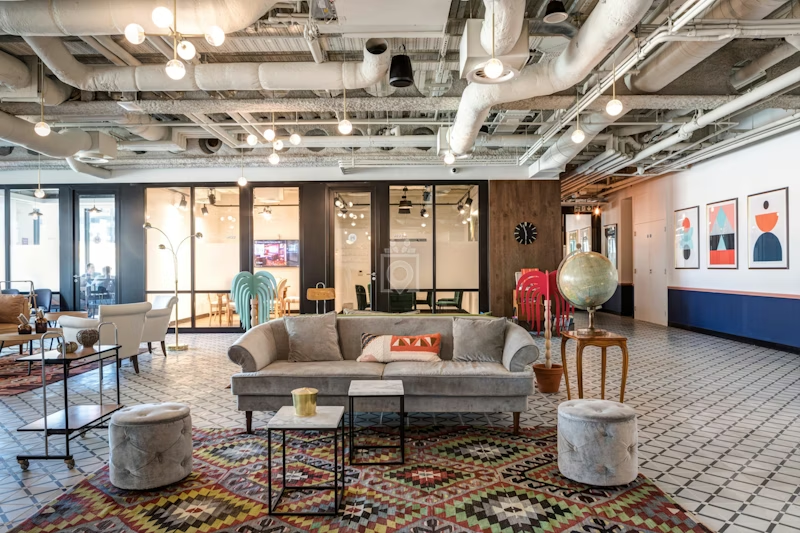
Mindspace offers flexible, high-end workspaces for AI teams in three key London spots: Liverpool Street, Old Street, and Hammersmith. From private offices to event space, it gives growing teams maximum flexibility without sacrificing a top-tier address.
Locations and Amenities
Mindspace runs two London locations. Mindspace Liverpool Street sits at 9 Appold Street, EC2A 2AP, on the 8th and 9th floors, four minutes on foot from Liverpool Street Station and its Elizabeth Line, Central, Circle, Metropolitan, and Hammersmith & City connections. The building sits where City finance meets Shoreditch creativity, with an 8th-floor balcony and 9th-floor coffee bar. Mindspace Old Street at 142 to 146 Old Street, EC1V 9BW, is a two-minute walk from Old Street Station in the heart of Silicon Roundabout.
Private Offices, Team Suites, and Meeting Rooms
Private offices at Mindspace Old Street and the other two locations are sized for AI teams at every growth stage, from a founder-and-two-engineers setup through team suites for thirty to fifty. Meeting rooms are bookable by the hour or day, event spaces handle launches and pitch nights for up to 150 guests, and a single membership works across all three locations. Book a tour, walk the floors, and see the actual space and current pricing for your team size before signing anything.
What Is the Best Office Location for AI Companies in London?
The best location depends on what your team optimizes for. If you want maximum ecosystem density and proximity to DeepMind, Google, Meta, Microsoft, and the top AI labs, King’s Cross and the broader Knowledge Quarter are the answer. Rents there are high and rising, but the location pays off if you need high visibility to attract key talent and network with peers.
Shoreditch and Old Street give you an established tech-cluster alternative at more manageable rents, ideal for early and growth-stage AI companies. These areas offer startup density and creative-district energy over Knowledge Quarter proximity. Soho suits an AI team wanting a Microsoft-adjacent West End presence. Holborn works for legal-tech-adjacent AI companies that want Knowledge Quarter proximity at lower cost.
Mindspace covers the two clusters where AI density is currently deepest with the Liverpool Street and Old Street locations, and adds Hammersmith for teams that prioritize transport connectivity or want a West London base. The best coworking spaces in London guide walks through how each London coworking option stacks up.
How Much Does Flexible Office Space Cost in London?
Hot desks in central London flex space run £250 to £450 per month depending on location and provider. Dedicated desks land at £350 to £550. Private offices at Mindspace London start from around £475 per person per month at Hammersmith, with Liverpool Street and Old Street commanding a premium reflecting Central London demand.
Direct leases in the City of London run £130.80 per square foot, plus high buildout costs, rates, and service charges. For teams under eighty, the all-in per-seat price of a flex workspace comes in much lower. For a Series A or B AI company managing burn, that gap frees meaningful runway.
How to Attract and Retain AI Talent in London
London AI companies are reportedly paying senior engineers and researchers over £600,000. In such a competitive market, the physical workspace is part of the recruiting pitch itself. A candidate weighing two comparable offers reads the office as a signal about how the company runs.
Premium Amenities
On-site gyms, decent coffee bars, and premium service levels have become standard expectations for AI and tech tenants rather than luxury add-ons. Candidates notice, and so do the recruiters trying to close them. A well-designed flex space handles the amenity layer without your team having to build any of it.
Wellness Facilities
AI development cycles run long and intense. On-site wellness infrastructure that lowers the friction of taking a break, yoga classes, meditation rooms, and a nearby gym partnership matter more than it looks on paper. Small resets across a sixty-hour week compound into better output and lower burnout.
Central Transport Links
AI occupiers prioritize accessibility ahead of any single submarket’s reputation. The Elizabeth Line has widened the pool of viable submarkets by cutting commute times across the city, and Hammersmith’s tube access to Heathrow makes international travel routine rather than a half-day operation. Where your team can get to your building from matters as much as what the building looks like.
Conclusion
London’s AI office market is moving at a pace no traditional lease can follow. A record 565,000 square feet signed in four months, headcount plans that swing from 200 to 800 inside a year, funding rounds landing every few months, and prime rents up 40 percent year on year. Instead of betting on static figures, smart teams prioritize options and adaptability.
Flexible workspace at Mindspace London gives AI teams the speed, scale, and cost transparency the sector needs. Book a tour before you commit to anything longer than a year, or if you want to spend a day working inside one of our location, a coworking day pass in London is the perfect option.
The Author

You might also like these reads — picked just for you.

Where to Rent Office Space in Amsterdam: Best Areas Compared
Amsterdam squeezes a remarkable range of business districts into a city you can cross by bike in half an hour. Pedal from a glass tower in Zuidas to a gabled canal house in the centre and the rent, the neighbours and the impression you make on clients all shift along the way.

Amsterdam Office Rental Prices: Why Flexible Workspace Is the Smarter Choice
You're comparing Amsterdam office costs, and the first numbers you'll find look almost too clean. A conventional lease runs 175 to 425 euros per square metre a year, depending on which postcode you're chasing. A serviced or flexible desk runs 250 to 800 euros a month, sometimes more, again shaped by district and building quality. Line those two numbers up side by side and the lease wins on paper, every time.
Renting a Small Office in Amsterdam: A Guide for Growing Teams
So your team is growing, and the spare room, the café corner and the borrowed meeting table aren't cutting it anymore. But you've still got options. When you rent a small office in Amsterdam, you're choosing between a dedicated coworking desk, a fully furnished private office, or a traditional commercial lease.
