

If you are weighing where to base a team in New York, the first question is rarely about square footage. It is about the L train. Will your people spend two hours a day getting to work? Will clients agree to come out to Brooklyn? What happens on a Tuesday morning when the L runs on a modified schedule, and half your calendar is in SoHo?

Few New York neighborhoods can match what Williamsburg offers. The L train reaches Union Square in eight to ten minutes. The J, M, and Z drop you at Delancey Street or Chambers. The NYC Ferry glides across the East River in under fifteen minutes.
This guide explains why Williamsburg works so well as a New York transit hub and how your team can commute there. It also covers the business case for each option and where to set up your team once you’ve picked the neighborhood.
Why the New York Commute is Costing You Talent
Long New York commutes drain talent, resulting in employee burnout, lack of productivity, and increased business costs for repeated hiring every 3-6 months. Companies demanding full-time office attendance lose competitive candidates to remote or hybrid-friendly firms. Top performers today prefer flexible schedules and convenient locations. Complex daily logistical challenges will eventually result in increased employee turnover, which is not good for the company’s image.
A ninety-minute door-to-desk trip from deep Queens or northern Brooklyn is not a minor inconvenience, but a compounding tax on a hire. In less than two years, the engineer you spent six months recruiting interviews in a company a few stops from their home. The location decision you made when the lease was signed is now a hiring problem you did not budget for.
Neighborhoods that attract top talent share a pattern: easy transit, a mix of residents, and a fast commute to Manhattan for meetings. Choosing a well-connected New York coworking base is a direct way to keep your best people from writing a resignation letter.
Why Williamsburg Has the Shortest Average Commute in NYC
Few Brooklyn neighborhoods offer as many transit options as Williamsburg. Williamsburg connects directly to Manhattan via four subway lines (L, J, M, Z), two ferry landings, and a bridge bike path, plus local G train routes and quick BQE highway access. Genuine redundancy, not just convenience.
Redundancy is the word that matters for a business. If the L runs on a weekend schedule, your team hops the ferry or the J. If the BQE is snarled, the G still moves. A Metro Manhattan analysis of NYC commute times ranks the neighborhoods with the shortest average trip to Midtown. North Brooklyn keeps showing up near the top of the list. This transit network is why Williamsburg’s office and coworking market grew so quickly.
Options for Commuters in Williamsburg
Williamsburg gives businesses fast, easy connections to Manhattan and across Brooklyn and Queens. You get efficient subway lines, scenic ferry routes, and excellent cycling infrastructure. These diverse networks reduce employee commute times and help companies attract talent from across New York City.
L Subway Line
The L is the main subway line. Bedford Avenue to Union Square runs eight to ten minutes on a less busy morning, which is faster than most Manhattanites get to their own offices. From Union Square, your team is one transfer from anywhere in the city. Trains run every three to four minutes at peak hours, and recent signal upgrades mean far fewer unexpected delays.
J, M, and Z Subway Lines
Marcy Avenue is the first stop out of Williamsburg heading into Lower Manhattan, dropping riders at Delancey, Bowery, Canal, and Chambers Street. For clients or investors based in FiDi, Tribeca, or the financial corridor, taking the J or M saves 15 minutes over transferring off the L. The Z runs express during rush hour and saves a few more minutes off the ride.
G Subway Line
The G is the only subway line that doesn’t go through Manhattan. For a business hiring across Brooklyn and Queens, that is a strategic asset. A developer living in Long Island City can be at your Williamsburg office in twenty minutes. A designer in Greenpoint is at their desk in ten, which is impossible with a Manhattan-based office.
NYC Ferry
Two landings serve Williamsburg. North Williamsburg connects to Wall Street, DUMBO, and Midtown in under twenty minutes. Unlike the subway, this commute is calm, has Wi-Fi, and offers a great start to the workday. When L train service is disrupted, ferry ridership spikes because it’s a reliable backup.
Citi Bike and Cycling
The Williamsburg Bridge has a bike path that puts your team into the Lower East Side in twelve minutes and Midtown in about twenty-five. With a Citi Bike dock on nearly every corner and flat streets, riding here is effortless. In summer months, plenty of Williamsburg workers commute on two wheels.
Driving via the BQE
Drivers coming from Brooklyn, Queens, or Long Island can reach Williamsburg via the BQE in 15 to 30 minutes off-peak. Street parking spots are available if you know where to look, with some garages within walking distance of the main office corridors.
What are the Benefits of Commuting from Williamsburg?
The benefits of commuting from Williamsburg come down to speed, flexibility, and opportunities when you settle at the intersection of four transit modes. Here is where each of those benefits shows up in practice.
Faster Access to Manhattan
The L runs Bedford Avenue to Union Square in eight to ten minutes, and the J, M, and Z put your team across the Williamsburg Bridge and into Lower Manhattan without a transfer. Compare that to a Manhattan-bound trip from Bay Ridge, Ditmas Park, or Bushwick, which will run forty minutes or need a change of trains. The time your people save on a commute is time they spend on work, family, or sleep, all of which show up in retention.

Better Connections Across Brooklyn and Queens
The G train’s Manhattan-skipping route stands out as an office feature. A Williamsburg office makes commuting effortless for talent in LIC, Greenpoint, Fort Greene, and Park Slope, unlike forcing them into Midtown. Cross-borough client relationships also work better when a meeting in LIC does not require two subway lines and a transfer.
Reduced Congestion and Delays
No neighborhood in New York has zero delays. Williamsburg has something better – a real redundancy. When the L runs on a weekend schedule, your team takes the ferry or the J. When the BQE is snarled, the G moves. A single-line neighborhood strands its workers on bad-service days, which never happens in Williamsburg.
Multi-Modal Commute Flexibility
Your engineer can take the L on a busy Monday, the ferry on a Friday when they want a quieter start, Citi Bike across the bridge in July, and the BQE for an off-peak drive when they are heading to a client site upstate. For a business running a hybrid or shared office setup, that flexibility is not a perk. It is what makes the in-office days work.
Why Mindspace Williamsburg is Ideally Placed for the NYC Commute
Mindspace Williamsburg sits on the East River waterfront, an eight-minute walk from both the Bedford L and Nassau G stations. The NYC Ferry landing at North Williamsburg is a five-minute walk from the front door. The Williamsburg Bridge bike path is around the corner. If you are looking at how to rent office space in New York, that geographical advantage is what you need.
For a team, that placement means optionality. An engineer coming from the East Village steps off the L and walks eight minutes to their desk. A designer in LIC takes the G and does the same. A client flying in from London lands at JFK, jumps on the ferry from Wall Street, and arrives at the building entrance without using the subway in between.
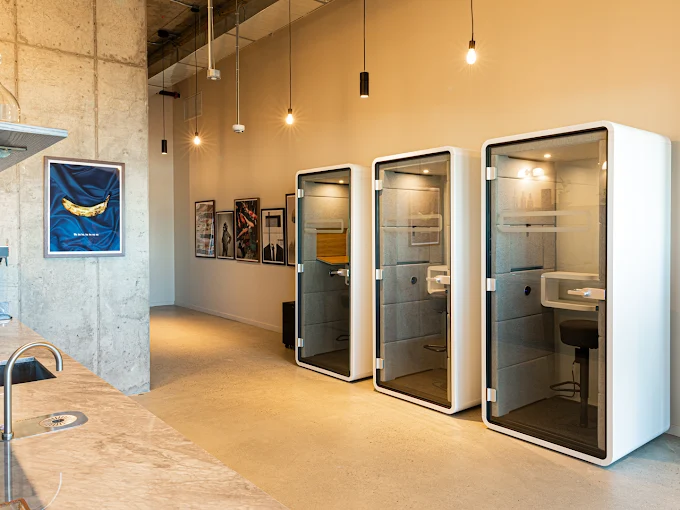
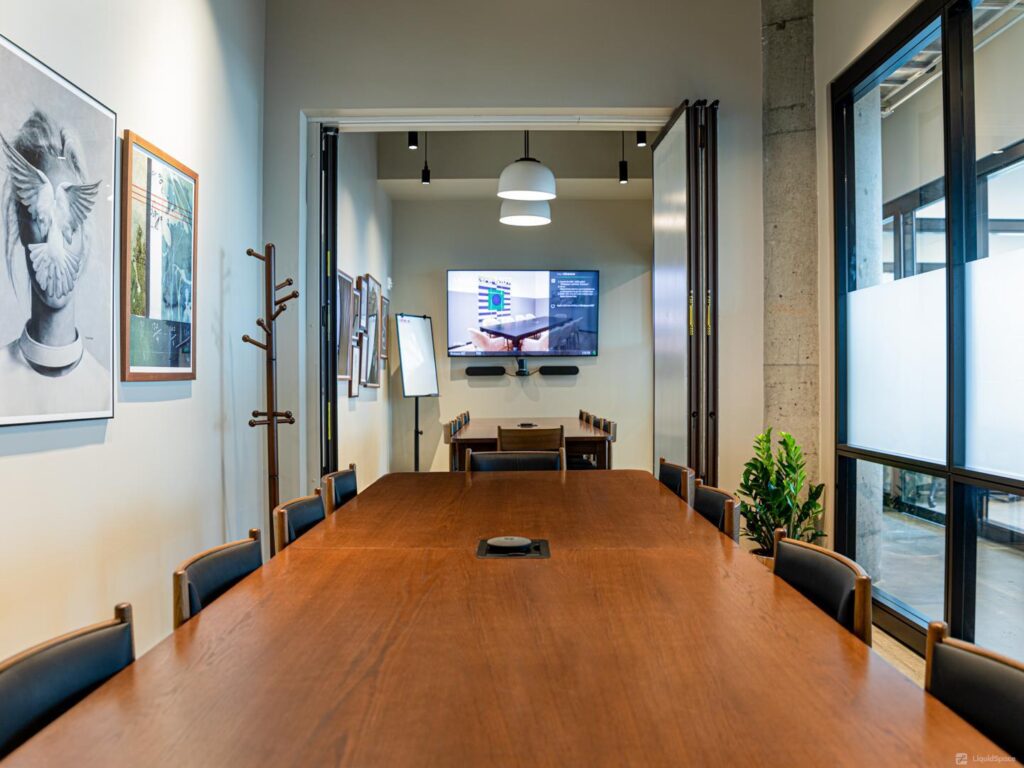
The workspace was built for teams that care about commuting. Waterfront views across to Manhattan, quiet zones for focused work, phone booths for calls, meeting rooms sized for two or twenty, and a members-only lounge for the rest of the day. On-site parking is available, and secure bike storage handles the summer commuters.
The 24/7 access means late nights and weekend sprints are covered. The community team runs regular events, which accelerates how quickly a new hire feels rooted in the office rather than trapped in it.
The Williamsburg Advantage: Why Teams Stay
Teams stay in Williamsburg because the neighborhood pays them back for showing up. Your desk sits a ten-minute walk from Domino Park on the waterfront. Step outside, and you’re surrounded by world-class espresso and everything from BQE taco trucks to sit-down lunches on Wythe Avenue. After work, you can walk through the same streets, but enjoy the bars and music venues.
For hiring, that diversity matters. A candidate weighing a Midtown office against a Williamsburg one is not just comparing commutes. They are comparing what the neighborhood looks like on a Thursday at six. Williamsburg wins that comparison for both the talents and the New York companies hiring in 2026.
Conclusion
Williamsburg’s transportation network is both a neighborhood perk and an operational advantage for a business weighing commute risk, client access, and hybrid-work flexibility against cost. Four subway lines, two ferry landings, a bridge bike path, and direct BQE access. Williamsburg gives you more transit redundancy than almost any neighborhood at a comparable price.
Mindspace Williamsburg sits eight minutes from both the L train and the G train, on the East River waterfront with direct Manhattan skyline views. You get the transit flexibility this guide covered alongside premium workspace infrastructure built for a modern team. Book a tour and see the neighborhood from the office your team will want to come into.
FAQs
How long is the average commute from Williamsburg to Manhattan?
The L train covers Bedford Avenue to Union Square in eight to ten minutes at peak. The J, M, and Z put you at Delancey, Canal, or Chambers Street in ten to fifteen minutes. The NYC Ferry from North Williamsburg reaches Wall Street in about twenty. Most Williamsburg-to-Manhattan commutes land in the fifteen to twenty-five minute range door to door, which is faster than most Manhattan neighborhoods can offer.
Will congestion pricing affect a team driving into Williamsburg?
Yes, as the congestion pricing applies to vehicles entering Manhattan below 60th Street. Williamsburg sits in Brooklyn, so a team driving into a Williamsburg office pays nothing extra. If anything, the pricing tilts the math further in Williamsburg’s favor for hires who prefer to drive.
What happens to my team’s commute when the L train has a service change?
The ferry, the J and M lines, Citi Bike across the Williamsburg Bridge, and the BQE all remain available. On weekends when the L runs on a modified schedule, ferry ridership rises, and the J picks up the overflow. A team based in Williamsburg is rarely stranded because the redundancy is built in.
Does a shorter commute really help with hiring and retention?
The ferry, the J and M lines, Citi Bike across the Williamsburg Bridge, and the BQE all remain available. On weekends when the L runs on a modified schedule, ferry ridership rises, and the J picks up the overflow. A team based in Williamsburg is rarely stranded because the redundancy is built in.
Yes, commute situation supports or breaks hiring and retention situations. Candidates weigh commute heavily when comparing offers, and long commutes are one of the more predictable drivers of turnover in the first two years. A Williamsburg base cuts commute time for a wide talent radius across Brooklyn, Queens, and Lower Manhattan, which makes offers more competitive and keeps hires from quietly interviewing elsewhere.
Is Williamsburg a good fit for client meetings and business development?
Yes, Williamsburg is a good fit for both client meetings and business development. Clients in FiDi, Tribeca, SoHo, and the East Village are one subway stop or a short ferry ride away, and the walk from the Bedford L to most Williamsburg offices is under ten minutes. For clients used to Midtown, the waterfront setting and skyline views also tend to make the meeting itself more memorable.
The Author

You might also like these reads — picked just for you.

Where to Rent Office Space in Amsterdam: Best Areas Compared
Amsterdam squeezes a remarkable range of business districts into a city you can cross by bike in half an hour. Pedal from a glass tower in Zuidas to a gabled canal house in the centre and the rent, the neighbours and the impression you make on clients all shift along the way.

Amsterdam Office Rental Prices: Why Flexible Workspace Is the Smarter Choice
You're comparing Amsterdam office costs, and the first numbers you'll find look almost too clean. A conventional lease runs 175 to 425 euros per square metre a year, depending on which postcode you're chasing. A serviced or flexible desk runs 250 to 800 euros a month, sometimes more, again shaped by district and building quality. Line those two numbers up side by side and the lease wins on paper, every time.
Renting a Small Office in Amsterdam: A Guide for Growing Teams
So your team is growing, and the spare room, the café corner and the borrowed meeting table aren't cutting it anymore. But you've still got options. When you rent a small office in Amsterdam, you're choosing between a dedicated coworking desk, a fully furnished private office, or a traditional commercial lease.
