


More and more professionals are turning their back on the standard office. Today, it’s the coworking space that reigns supreme. While there are a lot of myths surrounding coworking spaces, the fact remains that these dynamic locations are perfect if you’re looking to turbocharge productivity, connect with like-minded professionals, and nurture rewarding partnerships and opportunities.
What is a coworking space? How did the coworking revolution start? And what should you be looking for when choosing a space to establish your business? Below, we’ll explore the answers to all these questions and more.
The Origins and History of Coworking Spaces
Coworking spaces have never been more popular. In 2024, there were approximately 41,900 coworking spaces across the globe, providing freelancers, digital nomads, and small businesses a hub from which to operate. However, coworking spaces as we know them today didn’t really exist until the turn of the century.
The first coworking space, c-base, opened in Berlin in 1995. This so-called hackerspace served as a center for programmers and computer enthusiasts looking to share knowledge and learn skills. Later, c-base would introduce social events and seminars more akin to what you’d expect from a modern-day coworking space. It quickly inspired the launch of other hackerspaces elsewhere in the world, with venues popping up in Brooklyn, San Francisco, and further afield.
A more recognizable shared workspace emerged in Sweden in 1998. Centered in the Hitech Building in Stockholm, this collaborative workspace instantly proved popular with dot-com companies, with many clients renting dozens of desks at a time. Coworking spaces continued to evolve with the unveiling of Schraubenfabrik in 2002, a Swiss-based location that combined the utilities of a shared office space with the innovation of a community hub. Here, many of the fundamentals that would shape the concept of coworking took shape.

In 2005, San Francisco Coworking Space opened, later rebranding as the Hat Factory the following year. This venue location would quickly set the trend for modern-day collaborative workspaces. By 2010, there were more than 3,000 coworking spaces around the world, with approximately 100,000 people using them daily.
By 2016, coworking spaces had matured into the flexible workspace solutions we know and love today. Fueled by the gig economy and remote work revolution, shared office space was becoming the standard for many freelance workers. However, major companies were also getting in on the action, with the likes of HSBC and IMB actively encouraging their employees to use such spaces.
Over the next few years, companies offering coworking and community workspace solutions thrived. By 2018, more than a fifth of commercial office space in London was operated by coworking providers. While the COVID-19 pandemic led to a slight downturn in the market, coworking spaces managed to weather the storm. Some of the largest names in the business, including the likes of WeWork, might have failed, but their departure cleared the path for smaller, more innovative coworking space providers to flourish. By 2030, the coworking space market is expected to be worth more than $36 billion, more than triple its size in 2023.
How Do Coworking Spaces Work?
Are coworking spaces still a fairly novel concept to you? Below, we’ll take a closer look at the key factors to bear in mind when deciding whether or not coworking spaces are right for you.

Membership Plans and Pricing Models
Generally speaking, coworking spaces offer an affordable alternative to standard office rentals. There are no expensive upfront costs to fork out for, while ongoing charges are fairly modest compared to the average monthly rent for office space. If you’re looking to explore coworking spaces for the first time, here are some of the most common membership plans and pricing models you’re likely to encounter:

Day Passes vs. Monthly Memberships
Not everyone needs access to a dedicated desk every day of the week. For freelancers who only need the amenities of an office once or twice a week, budget-friendly day passes are the obvious solution. Those looking to access the full features of an office space throughout the week are better served by a monthly membership.

Private Offices vs. Shared Desks
While some people prefer the perks of a collaborative and agile workspace, some professionals and smaller businesses need something more conventional. Hot desking is a cost-effective solution for the more flexible professional, where using the same facilities every day isn’t an issue. However, those looking for more consistency throughout the week can choose to rent a private office.
Types of Coworking Spaces
While the majority of coworking spaces offer networking opportunities and foster collaboration and knowledge sharing, you’ll encounter a fair amount of variety. If you’re looking for a space that offers flexible workplace arrangements, you’re likely to come across the following:
Open-Plan Coworking Spaces
Open-plan coworking spaces are one of the most common and affordable collaborative workspace options around. Hot desking is the standard here, with users representing a wide variety of professions. Shared office amenities are a staple of these spaces, while additional facilities can include meeting and presentation rooms.
Private Offices and Suites
Many smaller companies prefer the luxury of a private office. Some coworking spaces offer additional private offices and suites alongside open-plan arrangements. As you’d expect, these private offices are set apart from unrelated professionals, operating autonomously from areas of coworking locations. They may include dedicated internet connections, office facilities, and meeting rooms reserved exclusively for private office users.

Industry-Specific Coworking Spaces
These spaces can take many forms, from open-plan arrangements to private officers. However, the layout of these spaces and facilities on offer are heavily tailored toward specific industries. Specialist equipment may be provided to facilitate profession-specific tasks, while higher-speed internet access and other enhancements may be required for certain digital industries.
Niche and Luxury Coworking Spaces
Some coworking spaces are more luxurious than others. These high-end alternatives to conventional collaborative workspaces are typically set in specially designed locations or period buildings. With a focus on luxury, premium amenities are the standard here, with features designed to enhance focus and boost productivity.
You’ll also typically find more creature comforts in these kinds of spaces, with everything from top-of-the-line ergonomic seating to spa centers on offer. Meanwhile, niche spaces offer separate areas designed with activity-based working in mind, offering environments perfectly attuned to specific tasks.
The Benefits of Coworking: Why Choose a Shared Workspace?
As well as being a cost-effective alternative to renting an office space, coworking brings a heap of benefits that can enrich your career.
Enhanced Productivity and Focus
Open-plan coworking spaces are practical and affordable. What’s more, the open-plan arrangement and lack of dividing walls can encourage concentration and boost output. Additionally, by not having to make compromises and work from a busy cafe or cluttered dining room table, you can say goodbye to the usual distractions and enjoy a significant productivity boost.
Networking and Community Building
Sometimes, life as a freelancer can feel lonely. When you choose to make your base at a coworking space, you’re opening yourself to a multitude of networking opportunities. You can connect with like-minded professionals and collaborate on exciting projects, secure new business ventures, or simply share knowledge and ideas with a diverse range of coworkers.
Cost Savings and Flexibility
Renting dedicated office space can prove expensive. Even if you manage to secure a competitive rate on a space, all those essential extras quickly stack up, seriously eating into your profit margin. With a coworking space, costs are generally much lower, with an all-inclusive pricing model that means there aren’t any nasty surprises added onto an invoice at the end of the month. Furthermore, you benefit from flexibility. You might only need a day pass for now, but many coworking space operators will allow you to easily upgrade to a monthly pass.
Improved Work-Life Balance
With greater flexibility comes a much healthier work-life balance. Coworking spaces aren’t bound by the usual restrictions of typical office life, with round-the-clock access meaning you don’t need to commit to a usual 9-to-5. The sense of community and innovation can also help inspire you, meaning you’re less likely to dread heading in for work at the start of the day.
Challenges of Coworking Spaces (And How to Work Around Them)
Coworking spaces are packed with benefits—flexibility, community, affordability—but let’s be real: they’re not perfect for everyone, all the time. Whether you’re a freelancer looking to escape your noisy apartment or a startup outgrowing your kitchen table, it’s important to go in with a clear view of what might not work so well—and what you can do about it.
1. Noise & Distractions
One of the most common complaints in coworking spaces is the background buzz. Open floor plans are great for community, but they’re not always ideal when you’re on deadline or need to focus on deep work. Phone calls, keyboard clatter, or that one guy who always eats pretzels too loudly—yep, it happens.
Workaround: Look for coworking spaces that offer quiet zones, phone booths, or even bookable private offices. Many spaces, including Mindspace, have thoughtful layouts that balance open areas with quiet corners.
2. Privacy Concerns
If your work involves confidential calls or sensitive data, coworking can feel a bit… open. Even with headphones in, it’s hard to shake the feeling that someone might be peeking at your screen.
Workaround: Choose a coworking membership that includes access to meeting rooms or private spaces. If you’re a small team or solo entrepreneur handling private info, a lockable office within a coworking space can give you the best of both worlds: community outside the door, privacy inside.
3. Limited Personalization
Unlike leasing your own office, you can’t exactly paint the walls your brand colors or mount a neon sign in shared coworking spaces. That might be a deal-breaker for startups focused on building a strong visual brand.
Workaround: Some coworking providers allow limited branding inside private offices, so if personalization matters to you, ask upfront. Or get creative with portable branding—like laptop stickers, branded notebooks, and digital signage during client meetings.
4. Space Isn’t One-Size-Fits-All
Not all coworking spaces are created equal. Some focus on social events and collaboration, while others are more heads-down and quiet. The vibe of the space can affect your productivity (and sanity).
Workaround: Try before you commit. Most coworking spaces offer free trial days or tours. Don’t be afraid to shop around until you find the one that fits your work style.
To summarize the pros vs cons of coworking:
| ✅ Pros of Coworking Spaces | ⚠️ Cons of Coworking Spaces |
|---|---|
| Enhanced Productivity and Focus Fewer distractions than home or cafes, designed for focused work. |
Noise & Distractions Open-plan layouts can get noisy and affect concentration. |
| Networking and Community Building Opportunities to collaborate, share ideas, and meet new clients or partners. |
Privacy Concerns Lack of visual and audio privacy, especially for sensitive work or calls. |
| Cost Savings and Flexibility All-inclusive pricing and no long-term lease make it budget-friendly, especially for freelancers and startups. |
Limited Personalization You can’t always brand or customize your workspace like you would in a private office. |
| Improved Work-Life Balance Flexible hours and a refreshing environment can reduce burnout and make work feel more enjoyable. |
Space Isn’t One-Size-Fits-All Not every coworking space suits every personality or work style—some trial and error may be needed. |
The Anatomy of a Coworking Space: What to Expect
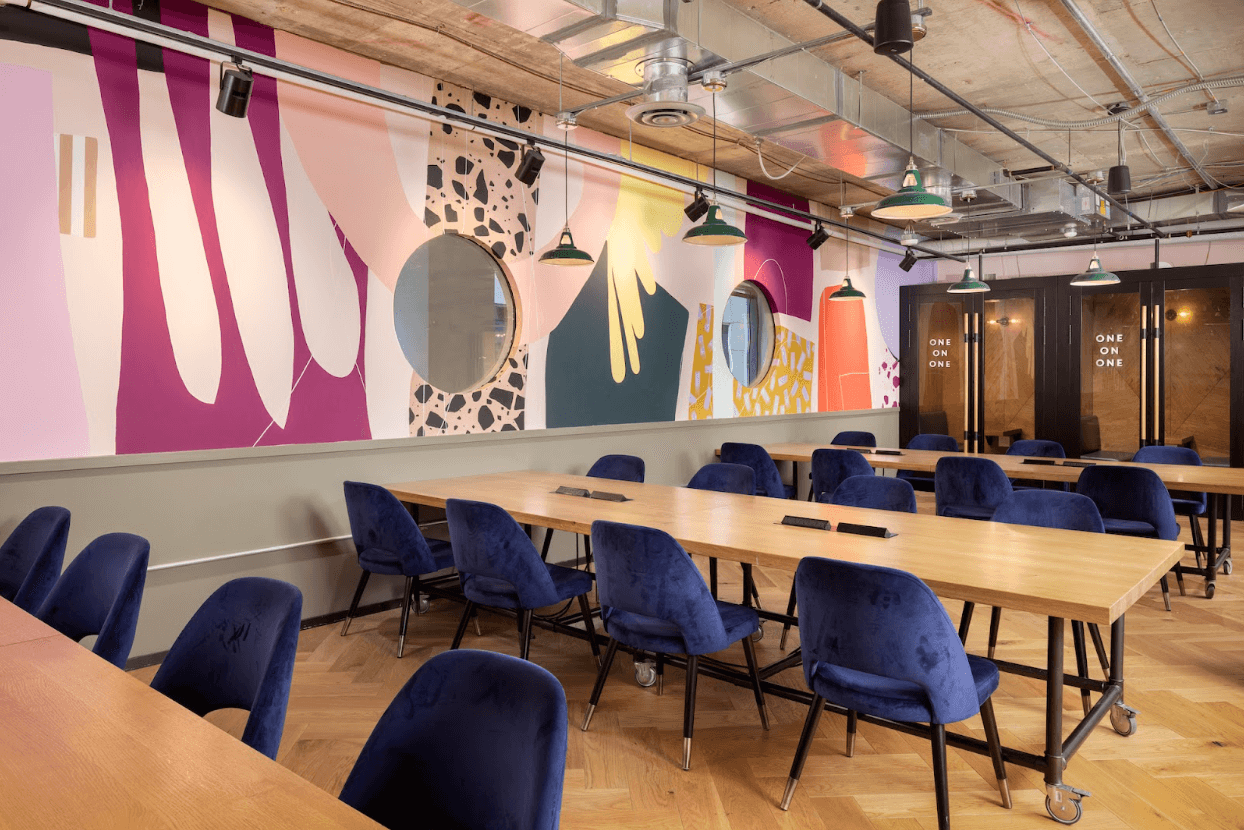
If it’s your first time using a coworking space, it can be difficult knowing what to expect. While amenities vary depending on the kind of coworking space you’re using, most typically offer the same basic features.
Essential Amenities and Services
Workstations are a staple of any coworking space. In an open-plan space, you can expect basic workstations and a hot-desking approach. Elsewhere, specialist workstations may be available to accommodate particular professions. High-speed internet is another basic feature shared by most coworking spaces, along with reliable print and scan facilities.
As well as dedicated desks, coworking space users can usually take advantage of separate conference and meeting rooms. Perfect if you need to have the occasional get-together with existing clients or pitch to brand new ones.
Coffee-making facilities and kitchens are also frequent features of coworking spaces, while comfort areas designed for relaxation are commonly found at the best facilities. When you’re looking to apply enhanced focus to the most pressing jobs, quiet zones are another useful addition.
Virtual office services like call screening, mail forwarding, and courier services are also sometimes offered, usually at a premium. These grant you the full functionality of having a conventional office space at a fraction of the cost of leasing one.
Community building is also key to many coworking spaces. Many venues regularly hold networking events and stage social activities to encourage users to mingle, connect, and collaborate.

Who Uses Coworking Spaces?

Considered the future of work for many industries, coworking spaces have become the go-to for many professionals. Particularly popular with freelancers, collaborative workspaces provide a flexible and accessible alternative to traditional office spaces for independent professionals. What’s more, they bring a sense of community that is sorely lacking for remote workers based in home offices.
One of the most exciting workplace trends of recent years is the rise of independent freelancers becoming digital nomads. These dynamic workers, typically combining freelance assignments with travel, were previously short on options when it came to finding a place to serve as a base of business operations. Nowadays, flexible options like day passes and rolling monthly memberships make coworking spaces an attractive prospect for digital nomads.
Startups and small businesses are also well catered for, with private suites and offices delivering all the essential amenities growing companies need, at a considerably reduced rate. Additionally, coworking spaces allow businesses on the rise to scale. Companies with an increasing demand can access the facilities to match, taking on more desks and amenities as they grow. Furthermore, private offices are ideal if you’re keen to create a strong company culture within a coworking space.
Even established companies and enterprise-level teams can reap the benefits of coworking spaces. As previously mentioned, many large-scale companies have been embracing coworking spaces for years. They’re particularly useful for encouraging innovation, while they can be used to support a hybrid work model as more companies roll out return-to-office mandates.
Coworking in the Hybrid Work Era
Let’s face it: work isn’t what it used to be. The 9-to-5 office grind is giving way to something way more flexible—and honestly, a lot more human. Hybrid work is the new normal, and coworking spaces are stepping up as the go-to solution for people who want the best of both worlds.
So What Exactly Is Hybrid Work?
Hybrid work simply means you split your time between working remotely and showing up at a physical workspace. Maybe you work from home on Mondays, hit the coworking space midweek, and take client calls from your favorite café on Fridays. There’s no one-size-fits-all formula—just freedom to design your own rhythm.
For freelancers and startups, this is a game-changer. You don’t need to rent an office full-time just to appear “professional.” Coworking spaces give you a polished, productive setting when you need it—without tying you down.
Why Coworking Fits Hybrid Work Like a Glove
Coworking spaces are, by design, super flexible. You can get a day pass if you just need a change of scenery once a week, or grab a hot desk a few days a month. For startup teams, hybrid setups might mean half the team is in-office while the rest are remote. Coworking accommodates both—no long leases, no wasted space.
Many coworking providers even offer multi-location access, so if you’re bouncing between cities (or just neighborhoods), your workspace can come with you. That’s especially useful for startups with distributed teams or freelancers who travel.
Better Than the Couch—But Not a Commitment
Let’s be real: working from your couch in PJs sounds fun… until it’s not. Hybrid work lets you keep that flexibility while escaping the distractions of home. And compared to traditional office leases, coworking is way more cost-effective and zero stress. No furniture to buy, no internet to set up, and no scary long-term contracts.
You get the buzz of a productive space, fast Wi-Fi, good coffee, and sometimes even yoga or happy hours—all the perks, none of the overhead.
The Takeaway?
Hybrid work is here to stay, and coworking spaces are basically made for it. Whether you’re a solo freelancer tired of your kitchen table, or a startup that doesn’t want to be locked into an office lease, hybrid workspaces like Mindspace give you the sweet spot between structure and freedom.
Coworking vs Other Work Alternatives
While coworking spaces are an increasingly popular option for freelancers and small businesses, they’re not your only option. Many businesses offer desk rentals within their company premises, although it can be hard to sync with an established company culture.
If you’re looking to avoid long-term fixed leases, serviced offices are another good option. While many extras, including internet and basic office facilities are included, serviced offices aren’t the most cost-effective option and there’s little scope for customisation.
Alternatively, you can look to connect with like-minded professionals and rent a shared office space. While overall costs are marginally cheaper than striking out on your own, it’s still an expensive venture. What’s more, counting on everyone else to fulfill their financial obligations is risky. You might also struggle to find peace and quiet in a coworking space like this.
Choosing the Right Coworking Space: Key Considerations
If you’ve decided that coworking spaces are the smart choice for you, it’s time to start actively looking for available rentals. To help you make the right choice, you’ll want to consider the following factors when selecting a location:
Location and Accessibility
Location counts when it comes to selecting a base of operations for your business. Central locations situated in the heart of town are great for attracting potential clients, but they can prove expensive. You compensate for this by looking for coworking spaces based further out, but you’ll need to guarantee excellent road and public transport links. At Mindspace, you’ll find an incredible selection of first-rate shared workspaces in prime locations, with reliable transport links as standard.
Community and Culture
There are many benefits to coworking, including a sense of community that can nurture connections and networking. However, an existing workplace might clash with your own. Before locking yourself into a long-term membership, sample the flavor of a shared workspace to make sure it’s a good fit with you and how you work.
Budget and Membership Options
Coworking spaces are usually far cheaper than traditional office rentals, but you still need to be careful that you’re not spending over the odds. Choose daily passes if you’re looking to embrace a hybrid work model and aren’t sure about your schedule yet. If you’re looking for a more conventional arrangement, go with a monthly membership. Mindspace offers a variety of membership options to suit every budget, making it easy to find an affordable coworking space solution that’s right for you.
Available Amenities and Services
Make sure you’re choosing a space that’s equipped with all the amenities you’ll need to complete your tasks. Whether it’s basic office facilities for everyday tasks or more specific amenities for activity-based working, you don’t want to cut yourself short just to save some money in the short-term.
Growth Opportunities
Every professional should be thinking about growth. Any workspace you choose needs to offer you scope for scaling up. Whether that’s additional desk space for freelancers as your workload increases or the option of private suites as you mature into a bona-fide company, any coworking space needs to be able to grow as you do.

Coworking Etiquette: Best Practices for Shared Workspaces
If you want to make a success in a shared workspace, you’ll need to get familiar with the basic etiquette of coworking. Shared spaces and resources are the norm here, so respect others and ensure everyone can enjoy ready access to the amenities they need to complete their tasks.
You’ll also need to think about communication. Daily kick-off meetings aren’t necessarily the standard, so you’ll need to take your own initiative when communicating with others. To avoid culture clashes and causing issues with people’s daily activities, be sure to familiarise yourself with everybody else’s working patterns so you can respect boundaries.
Coworking vs. Traditional Offices: What’s the Better Fit?
Thinking about renting your own office? Hold that thought. If you’re a freelancer, small team, or early-stage startup, the traditional office model might not make as much sense as it used to. Coworking spaces are changing the game—and not just because they come with coffee and cool furniture.
Let’s break it down.
Flexibility vs. Long-Term Commitments
Traditional office leases often lock you in for years. That means signing a 3- to 5-year lease, dropping a big deposit, and possibly taking on a space that’s too big now but “should fit you in the future.” For a growing startup or a solo founder still figuring things out, that’s a lot of pressure.
Coworking? Way more flexible. You can rent a desk for a day, a month, or scale into a private office suite as your team grows—without committing to more than you need. It’s ideal for agile businesses that move fast and pivot even faster.
Upfront Costs: DIY vs. Done-for-You
Leasing a traditional office usually means buying furniture, installing Wi-Fi, paying for utilities, and maybe even hiring a cleaning crew. That adds up—fast.
With coworking, everything’s ready on day one. Desks, meeting rooms, fast internet, coffee, community—you walk in and start working. It’s all included in one transparent monthly fee. No hidden costs, no last-minute IT emergencies.
Isolation vs. Community
One thing people don’t talk about enough? The vibe.
Traditional offices can be pretty quiet—your team, your walls, your bubble. In contrast, coworking spaces are built for connection. You’ll be surrounded by other startups, freelancers, creatives, and maybe even your next collaborator or investor.
For freelancers, it beats working alone. For startups, it’s like being in an incubator, without the strings attached.
Professionalism Without the Hassle
Need to meet a client? Want your team to have a professional space that doesn’t scream “bootstrapped”? Coworking spaces offer coworking offices to rent that look and feel legit—without the overhead. Think fully equipped meeting rooms, stylish lounges, and front-desk service. No more awkward coffee shop interviews or Zoom calls from your kitchen.
TL;DR: Traditional offices have their place—but they’re expensive, inflexible, and better suited for established companies. If you’re just getting started, building something lean, or simply don’t want the hassle, coworking spaces offer the modern, flexible office alternative you’ve been looking for.
Coworking vs. Remote Work: Is It Time to Leave the House?
Working from home definitely has its perks—no commute, full control over your playlist, and the option to live in sweatpants. But after a while, even the coziest home office or your favorite café starts to feel… not so inspiring. That’s where coworking comes in.
If you’re trying to decide between staying remote or joining a coworking space, here’s what to consider.
The Productivity Question
Sure, working from home can be super efficient—until laundry calls your name, the dog needs a walk, or your neighbor starts drilling into the wall again. Freelancers and remote workers know the struggle: it’s hard to stay focused when your office is also your kitchen, your gym, and your nap zone.
Coworking spaces give you a dedicated place to get in the zone. You show up, plug in, and get to work. The energy of others doing their thing helps boost your own motivation, and separating your workspace from your living space can seriously level up your productivity.
Combatting the Isolation of Remote Work
Working remotely can get lonely. Even the most introverted among us eventually miss the casual chats, team vibes, or just being around other humans.
Coworking spaces offer community without the pressure. You can be as social or as solo as you want. Grab coffee and network, or keep your headphones on and do your thing. Either way, you’re not totally isolated—and that makes a difference in your mental health and overall work satisfaction.
The Coffee Shop Dilemma
Coffee shops seem like the dream office: caffeine on tap, ambient noise, and maybe a nice pastry. But let’s be real—they’re not built for work. There’s no guaranteed seat, outlets are scarce, and it’s not exactly ideal for Zoom calls or deep work.
Coworking spaces solve this. You still get the coffee, but with reliable Wi-Fi, meeting rooms, and a professional setup that won’t leave you hovering near a power socket or apologizing for background noise on calls.
Professionalism and Boundaries
When you meet a client or investor, do you really want to invite them to your living room—or that noisy café? Coworking spaces give you access to polished meeting rooms and quiet, distraction-free zones. It’s a huge step up for professional image, especially if you’re trying to grow your business.
Conclusion: Embracing the Coworking Revolution
With the average cost of renting an office on the rise, there’s never been a better time to explore the benefits of coworking spaces. What’s more, if you’re looking to embrace collaboration and immerse yourself in a dynamic professional community, coworking spaces are the obvious choice.
If you’re looking to join the coworking revolution, let Mindspace help you find the perfect place to set up shop. At Mindspace, you’ll find an extensive selection of quality coworking spaces in some of the most sought-after locations on the planet. From dedicated desks and team suites to more niche spaces designed for activity-based working, you’re guaranteed to find a coworking location that ticks all the right boxes. Choose budget-friendly day passes if you’re looking for a flexible working arrangement or take advantage of great rates on all-access memberships.
Looking to learn more about Mindspace’s coworking spaces? Why not get in touch today to discuss our coworking spaces in more detail?
The Author

You might also like these reads — picked just for you.

Virtual Office Miami: Why Renting a Business Address Makes Sense
Miami keeps pulling companies in. US firms want the tax angle, Latin American partners treat a Miami address as familiar ground, and international investors recognise the city as a serious base for doing business. The catch is the price of actually being there. A Downtown lease means spending several thousand dollars a month before you […]

“The office has to earn its purpose.” – Interview with Dr. Hans Rusinek
Dr. Hans Rusinek, author, researcher, speaker, and advisor. Featured Image Credit: Laurin Schmidt Introduction You research various topics around work, meaning, productivity, and transformation – in your view, to what extent does the office as a physical space influence productivity at work? A: It has a major influence. The office is not a neutral backdrop, […]

Rent Office Space by the Day in NYC: Without the Lease, the Overhead, or the Compromise
Picture a Tuesday. You have a client pitch at 11, two discovery calls before lunch, and a three-hour working session with a designer in the afternoon. You live in Queens. The client is flying in from Chicago. A coffee shop gets you there for the calls and loses you for the pitch. Your apartment works […]
