

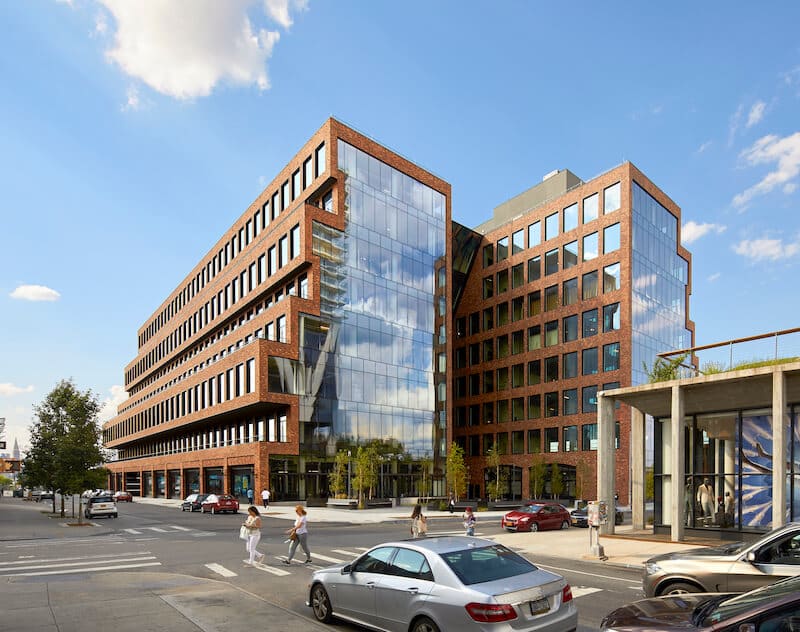
You want a New York address on your invoices without paying New York rent, and a virtual office gets you exactly that. You rent a real commercial street address at a staffed building, someone on the team there signs for your mail, and you book a meeting room on the days you actually need to sit across from a client.
At Mindspace Williamsburg, that plan runs $140 a month. Renting an office in New York isn’t cheap, and that gap is exactly why founders and companies based outside the state keep choosing the address over the lease.

What Are the Benefits of Getting a Virtual Office in New York?
A virtual office in New York gets you two things: a credible commercial address, and the administrative machinery behind it. The address will appear on your website, your invoices, and your state filings. Having that setup matters the moment a Department of Taxation and Finance letter arrives while you’re working from Lisbon.
Cost and Space Savings
Manhattan overall asking rent reached $72.83 per square foot in the second quarter of 2026. Renting just 1,000 square feet runs about $6,000 a month, and that’s before furniture, internet, insurance, or a cleaner. A $140 virtual office plan costs $1,680 a year. You also skip the security deposit and the five-year term that makes a lease painful to exit.
Credibility and Privacy
Listing your home address on public records basically hands your front door to junk mailers and curious internet searchers. New York publishes LLC formation records, so whatever address you file becomes practically public. Virtual offices resolve that issue. A commercial address at 25 Kent Avenue keeps your apartment out of that record. Clients read the address too, whether you want them to or not. A Brooklyn waterfront building signals a different kind of business than a residential street, and you get that signal for $140 rather than a lease.
Operational Support
The first obstacle you face with a cheap business address is the mail. With a staffed reception, someone accepts your mail and alerts you immediately when something needs your signature. From there, you choose whether to collect it in person or forward it, completely on your time. Meeting rooms sit in the same building, which matters the week a client flies in and you need a room with an actual door rather than a table at a coffee shop.
Key Reasons to Get an NYC Virtual Office
Still not sure whether a NYC virtual office is what you need? You have five bold reasons to consider it: savings, relevant address, protected privacy, brand credibility, and access to hybrid workspace. Here’s how each benefits your company:
Save on Commercial Overhead
Rent is only the headline number hiding underlying operating costs. A traditional lease bundles utilities, cleaning, insurance, and long-term build-out costs right into your monthly rent. Brooklyn asking rents reached $39.46 per square foot in the second quarter of 2026, and even that lower figure still carries the same overhead. Renting office space by the day at Williamsburg costs $400 when you actually need the room, and nothing at all in the months you don’t. Once you compare it to a full lease, the alternatives to a standard lease stop looking like a compromise and start looking like the obvious choice.
Meet LLC and Banking Address Requirements
New York accepts a commercial street address when forming an LLC. You can list a virtual office on your Articles of Organization and use it to receive service of process from the Department of State. Banks apply a stricter test than the state does. Know Your Customer rules require a verifiable street address, and a P.O. box gets rejected outright.
Most banks accept a staffed commercial address without issue, though some fintechs draw a harder line. Mercury won’t accept a virtual office for the legal address field, which pushes founders to list it as the mailing address instead. Copy the address character for character from your EIN letter when you do, since a mismatch between your filing and your application is enough to stall the review.
Protect Personal Privacy
People picture a process server showing up at 8 p.m., but the real risk is your home address sitting exposed in state records and invoice footers every day. Route it all through a commercial address, and your apartment stops doubling as your business address. USPS Form 1583 authorizes your provider to receive mail on your behalf, and you sign it before the address goes live.
Build Instant Brand Credibility
In New York, your business address is an instant proxy for your credibility. A Williamsburg waterfront address signals creative tech, a much better fit for a design studio than a Midtown tower. Brooklyn has become one of the strongest office locations in the city for exactly that reason, and the address hands you that association without asking you to commit to a lease to get it.
Access Hybrid Work Infrastructure
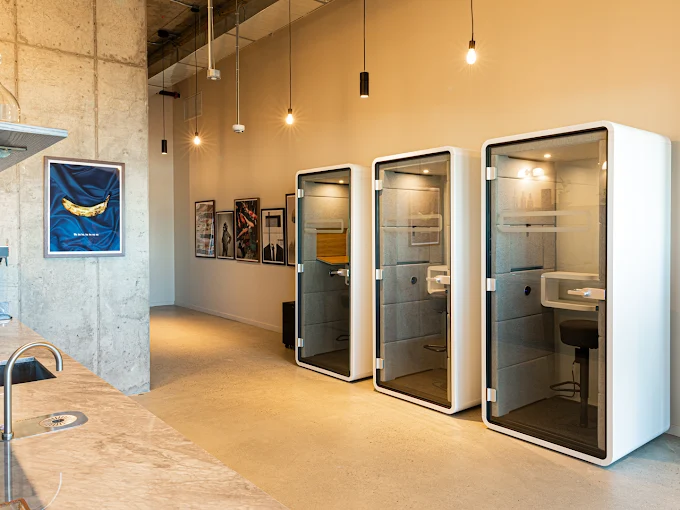
Even with a team spread across three time zones, you may only need New York desk space twice a quarter. A virtual office plan holds your address year-round, and you buy desk time and meeting rooms only when your team is in the town. A hybrid office membership lets your team book desks by the day instead of carrying seats nobody uses, and unused credits roll into the next month. Hot desking and desk hoteling run on different booking rules, and knowing the difference shapes how you plan those weeks in advance.
What to Look for in a 2026 Virtual Office Provider
Two plans can look identical on a landing page and cost very different amounts over a year, with the gap hiding in the fine print rather than the headline rate.
Choose a Genuine Commercial Address
Some address services operate out of retail pack-and-ship stores. Bank underwriters recognize those locations instantly and often reject them outright. Ask whether the address belongs to a real office building or a shared office space with staff on site during business hours, and whether you could walk a client into the lobby if you wanted to.
Check Pricing and Fees
Compare the total across twelve months instead of the advertised monthly rate. Many providers list a low headline number and then bill mail forwarding, phone lines, or meeting room hours as separate add-ons. Other services lock you into 6- or 12-month minimums that auto-renew without advance written notice. That trap catches anyone assuming ‘month-to-month’ actually means flexible. Tack forwarding and meeting rooms onto a budget plan, and you’ll often pay more than a plan that bundled them upfront. Ask for the full list of what’s bundled before you compare a single number across providers.
Review Mail Forwarding and Administrative Support
To avoid having a signed client contract sit unread for nine days, ask up front how fast mail notifications arrive and whether scanning is included or billed per page. Weekly forwarding works best for a business that receives bank statements and routine correspondence. Same-day scanning earns its cost the moment something shows up with a legal deadline attached, and in New York that deadline rarely gives you much room to spare.
See It in Practice at Mindspace Williamsburg

Mindspace Williamsburg sits at 25 Kent Avenue on the Brooklyn waterfront, inside a purpose-built block rather than a converted warehouse. The floor covers 37,400 square feet with 446 workstations, and an expansion in summer 2026 takes capacity past 550 members. You’re an eight-minute walk from the Bedford Avenue L station, and about the same from Nassau Avenue on the G.
The virtual office plan bundles together what most providers split across separate invoices. You get the commercial address and mail handling from the team on site, and if a client wants to meet face to face, meeting rooms in the same building run $105 an hour. A coworking day pass runs $60 for a desk, and a private day office costs $400, and you book either only in the months you actually need it.
Members use the building gym and the rooftop deck, two of the amenities employees ask for most. That’s worth knowing when you’re deciding where to bring a candidate for a final interview.
How Much Does a Virtual Office in New York Cost?
Mindspace New York starts at $140 a month for the address and mail handling at Williamsburg. Across the wider market, plans run from a bare address at the low end to $300 and above with a live receptionist added on. Rent drives the price, because provider overhead gets passed straight to your bill.
Budget for the extras rather than the advertised number on marketing materials. Mail forwarding gets billed per shipment, and a dedicated phone number with an answering service doubles what you’re paying for a plan. Meeting rooms bill by the hour unless credits come bundled in. In Williamsburg, that runs $105 an hour. Add it all up and a realistic annual figure for an address, mail handling, and occasional meeting room use in New York sits between $2,000 and $3,500. Set that against 1,000 square feet in Manhattan at $72.83 per square foot, which comes out to $72,830 a year before you’ve bought a single chair.
Can a virtual office also serve as my registered agent in New York?
Not by default, because New York works differently than most states do. Under Section 301, the Secretary of State acts as the mandatory agent for every New York LLC, forwarding legal mail to the address on your filing. That forwarding address can be your virtual office. Naming a private registered agent under section 302 is optional. Any named agent needs a New York address where someone can accept legal papers in person. A staffed office passes that test, but an unstaffed mailbox fails. Mindspace doesn’t sell registered agent service, so pair the address with a separate agent if that’s what you need.
How much does New York’s LLC publication requirement cost, and does my address affect it?
Your address decides the bill here. Section 206 requires new LLCs to publish a formation notice in two county-designated newspapers for six consecutive weeks. Once published, you must file a Certificate of Publication along with a $50 fee. Manhattan is the most expensive county in the state because the clerk designates the New York Law Journal, and handling it yourself can run $1,400 to $1,900 or more. Kings County, which covers Williamsburg, comes in around 15% to 25% under that figure. Miss the 120-day window, though, and the state suspends your authority to do business.
Conclusion
A virtual office makes the most sense when you need New York to treat you as a real business without needing a desk there every day. Freelancers billing city clients, and distributed teams that fly in twice a quarter, get more out of $140 a month than out of a lease they’d only half use.
Before you sign, confirm the address belongs to a staffed commercial building you could actually walk a client into. Price the twelve-month total with forwarding, scanning, and whatever meeting room hours you expect, since cheap-looking plans rarely stay cheap once the extras land. Check which county the address puts you in too, since Kings County will cost you several hundred dollars less than New York County on the same legal notice.
Book a tour of the Williamsburg floor before you commit, or start on the virtual office plan and move up to a desk once the New York work justifies it.
The Author

You might also like these reads — picked just for you.

Why Flexible Workspaces in San Francisco Make Sense in 2026
San Francisco spent three years as the cautionary tale of American office real estate. That story has turned. Vacancy fell to 30.1% in the second quarter of 2026, down from 33.8% a year earlier, and AI companies signed enough space to make the city the largest single contributor to national office absorption. Rents are climbing […]
Why Williamsburg Is the Answer to Your Team’s New York Commute Issues
If you are weighing where to base a team in New York, the first question is rarely about square footage. It is about the L train. Will your people spend two hours a day getting to work? Will clients agree to come out to Brooklyn? What happens on a Tuesday morning when the L runs […]

Miami Office Space Costs in 2026
Miami is now the most expensive office market in the United States. Average asking rents in Miami-Dade County climbed to $67.12 per square foot in Q2 2026, surpassing Manhattan and every other major US area. In June, Peter Thiel’s family office signed an 18,158 square foot lease at 830 Brickell for $250 per square foot, […]
