


Walk along the Herengracht on a weekday morning and you’ll hear a dozen languages before you reach the next bridge. Founders from Bangalore, product leads from São Paulo, and finance teams who swapped London for a canal view all share the same cycle lanes. Amsterdam has a way of pulling ambitious companies in, and in 2026 that pull shows in a tight central office market.

The city has one of the best-connected airports in Europe, an English-speaking workforce, and a business culture that rewards plain talking over corporate theatre. More than 3,000 international companies are present across the Amsterdam Area, and plenty more are scouting floor space right now.
Moving here still takes planning. Housing is tight, the power grid is stretched, and the tax perks for international hires are shifting. Companies come for the talent, tax and connections, chase central canal-side workspaces, and budget for housing, grid and migration hurdles before they sign anything.
Why are companies choosing Amsterdam in 2026?
Companies are choosing Amsterdam in 2026 for a seat inside the EU single market without the friction they’d face in bigger, pricier capitals. Since Brexit, banks, trading platforms and media groups have shifted their European hubs here, and that first wave laid the groundwork for everyone following behind. You land in a city that already knows how to onboard international teams, from registering a company with the Chamber of Commerce to opening a business bank account in English.
Geography plays its part too. Schiphol sits roughly 15 minutes by train from the centre, so a sales trip to Paris, Frankfurt or Copenhagen fits inside a single working day. Your clients can fly in for a morning workshop and be home for dinner.
The city also keeps scoring well on the things your people care about. Amsterdam took the top spot in the Arcadis Sustainable Cities Index 2024, and the Netherlands placed seventh in 2026 World Happiness Report. Those rankings matter when you’re asking a senior engineer to uproot their family.
And the talent keeps coming. Universities, research labs and a thriving scale-up scene feed a steady stream of skilled hires, which means you spend less time hunting and more time building.
Key drivers for relocation and growth in Amsterdam
Tax sits near the top of most relocation spreadsheets, and the Dutch system hands you three real advantages. The headline corporate rate is 25.8%, with a lower 19% band on the first €200,000 of profit. The innovation box regime taxes profits at 9% if your business earns income from patented technology or qualifying software. For a product company with serious R&D spend, that difference adds up fast.
The 30% ruling lets you offer recruits from abroad a tax-free allowance on up to 30% of their salary. In 2026 it still runs at the full 30% for up to five years, as long as the employee clears the salary threshold of €48,013 after the allowance (or €36,497 for under-30s with a master’s degree). That perk helps you compete for engineers and analysts who’d otherwise weigh up offers from London or Zurich. The catch comes in 2027, when the rate drops to 27% for newer holders.
Digital infrastructure gives you another reason to look hard at the city. AMS-IX ranks among the largest internet exchange points on the planet, so latency-sensitive platforms in fintech, gaming and streaming tend to cluster nearby. Pair that with the Port of Amsterdam and Schiphol’s cargo operation, and you’ve got a base that suits software houses and physical-goods brands alike.
Government support makes the landing softer. The Netherlands Foreign Investment Agency and Amsterdam Inbusiness connect you with lawyers, recruiters and permit specialists at no cost, and the IND runs a fast-track route for recognised sponsors hiring highly skilled migrants.
Stability rounds out the case. Dutch contract law is predictable, courts handle commercial disputes in English through the Netherlands Commercial Court, and investors trust the system. When you’re pitching your board on a European expansion, that predictability carries real weight.
Why do people want to work in Amsterdam?
People want to work in Amsterdam for its multilingual talent pool, flat Dutch business culture, normal part-time and remote work, and canal-side quality of life. Candidates sign faster because of that.
Multilingual talent pool
The Netherlands came first out of more than 100 countries in the EF English Proficiency Index 2025, so English works as the default office language from day one. Many Dutch professionals also get by in German or French, and the city’s international crowd adds Spanish, Polish, Hindi and Mandarin to the mix. You can staff support desks and sales teams from one building on the canal belt if they cover several European markets.
The Dutch business culture
Dutch business culture keeps meetings short and to the point. Your colleagues will tell you what they think of your plan, kindly but without padding, and junior staff are expected to challenge senior ones. Hierarchies stay flat. Decisions follow a consensus model known as polderen, which can feel slow at first, though once the team agrees, execution moves quickly because everyone already bought in.
Work-life balance

Part-time contracts are normal across every level, and leaving at half past five raises no eyebrows. Statistics Netherlands reports that 80% of Dutch companies offered remote work in 2025, with employees spending around 15 hours a week working from home. Your team expects that flexibility, which is why so many firms pair a central base with a hybrid office setup that flexes with real attendance.
Quality of life
Your commute can be a ten-minute bike ride past houseboats. Weekends mean a picnic in the Vondelpark, a gallery afternoon at the Stedelijk, or a half-hour train ride out to the dunes at Zandvoort. Healthcare and schools are solid, and the international schools in Amsterdam Zuid and Amstelveen make family moves easier to sell.
How is Amsterdam’s tech and startup ecosystem growing?
Amsterdam’s tech ecosystem is growing at the centre of a Dutch scene of 11,301 active tech companies, according to Techleap’s State of Dutch Tech 2026. Dutch startups and scale-ups pulled in €2.64 billion of venture capital in 2025, and the Noord-Holland and Zuid-Holland provinces together soaked up more than 70% of it. Amsterdam is the obvious postcode if you want to be where the money lands.
The city’s homegrown success stories give you a sense of the depth. Adyen built a global payments platform from the Rembrandtplein area, Booking.com grew into one of the world’s biggest travel brands from its campus beside Centraal Station, and Mollie and Bunq keep pushing fintech forward. AI infrastructure firm Nebius chose Amsterdam for its headquarters too, adding a fresh layer of machine learning talent.
That cluster effect matters for you. Engineers who’ve shipped products at those companies circulate through the startup scene, angel networks spring from their exits, and meetups in Amsterdam Noord or around the Zuidas fill up most weeknights. Deep tech accounts for roughly 12% of Dutch tech firms but a much bigger share of successful scale-ups, so if you’re building in robotics, quantum or life sciences, you’ll find peers who speak your language.
Funding rounds have grown larger even as deal counts dipped, which tells you investors are backing companies with proof of traction. Arrive with a working product and a team in place, and you’ll be well positioned.
Amsterdam vs other European cities for work
Compared with other European cities for work, Amsterdam gives you EU access, English-first offices and lower costs than London without Berlin’s German-heavy admin. London still wins on scale if your clients sit in the City or Canary Wharf, but every desk costs more and sits outside the EU. Berlin has lower rents and scrappy founder energy, though German paperwork slows English-first teams.
Amsterdam lands in the sweet spot between them. You get EU access, English everywhere and a compact centre where most clients are a bike ride away.
Plenty of companies don’t pick just one city. A common setup puts the European HQ in Amsterdam, a sales pod in London and an engineering hub in Munich or Warsaw. With Mindspace spaces in each of those cities, your people can badge into a familiar workspace wherever the next pitch takes them.
What office space are companies looking for in Amsterdam in 2026?
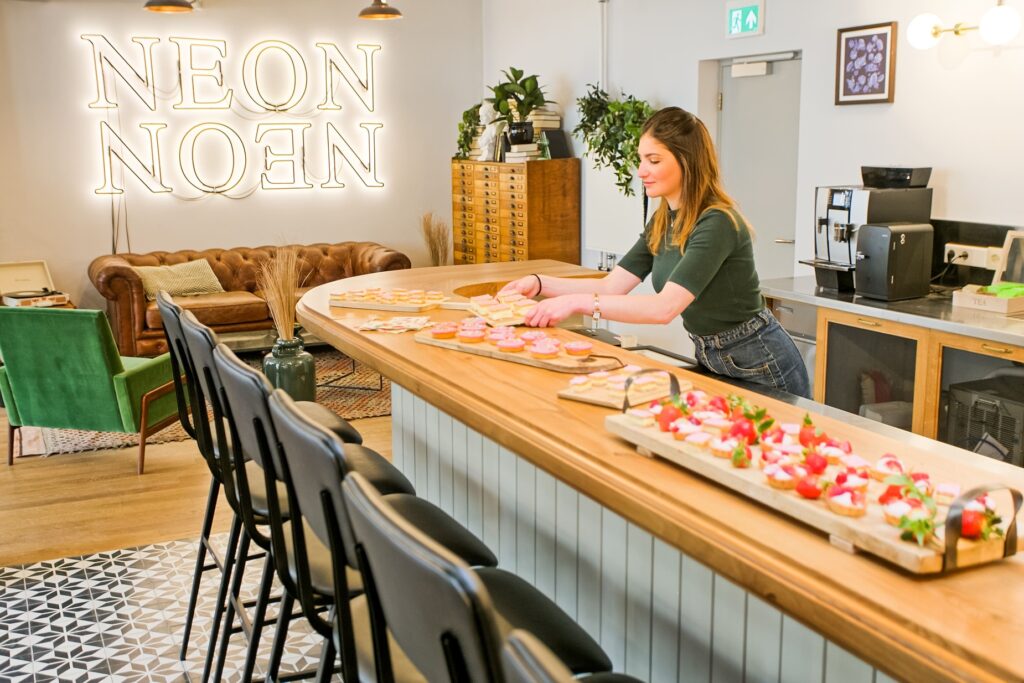
Companies looking for office space in Amsterdam in 2026 want prime, central buildings, and those went first among the 210,000 square metres leased in 2025, per Knight Frank.
The demand for quality workspaces
Vacancy on the Zuidas has dropped below 5%, with prime rents there climbing past €650 per square metre a year. Older stock in Sloterdijk and Riekerpolder sits emptier, because tenants are trading square footage for better air, light and amenities. Compare the best areas for office space in Amsterdam and current office rental prices before you set a budget.
Why the city centre is drawing flexible workspace operators
The historic centre drove a large share of 2025 leasing, and flex operators were among the keenest bidders. Canal houses and former bank halls can’t easily be rebuilt, so the supply stays fixed while demand keeps rising. A flexible lease lets you claim a central address without a ten-year commitment.
Offices that win over talent
Your staff turn up for a frescoed boardroom on the Herengracht or a terrace overlooking Dam Square, and they dodge a grey business park off the ring road. Quiet focus rooms, proper coffee and a space you’re proud to show clients make the commute worth it.
What challenges should you plan for?
Plan for three challenges in Amsterdam: tight housing, grid capacity limits and stricter migration rules.
Housing shortages and rising costs for relocating staff
The Netherlands is short of 384,000 homes in 2026, per Volkshuisvesting Nederland. In Amsterdam, Pararius puts new private rents at €28.53 per square metre in early 2026, so an 80 m² flat costs around €2,280 a month. Build a relocation budget that covers temporary housing for your first hires, and look at Amstelveen or Haarlem to stretch it further.
Grid capacity limits on new office and data space
Grid operators have warned of waiting lists for large power users across much of Noord-Holland lasting at least a decade, with south-west Amsterdam and the Zuidas flagged for overloads from 2026. Moving into an existing, already-connected building sidesteps that queue.
Stricter migration rules and changes to the 30% ruling
From January 2027, anyone who started on the 30% ruling in 2024 or later drops to a 27% maximum, and holders become taxable on worldwide savings and investments. The government has also announced tougher checks on highly skilled migrant sponsors and higher salary thresholds, so check your recognised sponsor status and pay bands early.
Landing your team in Amsterdam with Mindspace
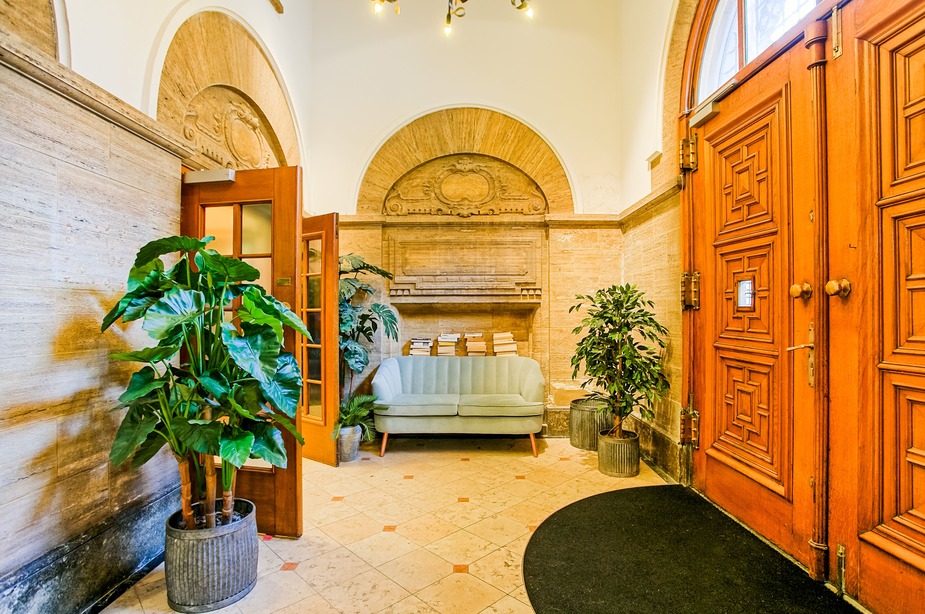
Mindspace gives you move-in-ready offices in buildings that are already wired, furnished and connected to the grid, so you can start hiring the week you arrive. Mindspace Dam at Nieuwezijds Voorburgwal 162 spreads across five floors of a former bank with a terrace above Dam Square. Mindspace Herengracht at number 168 pairs a UNESCO-listed canal house with a private garden, and Mindspace House sits a short walk from Centraal Station.
Managed floors at Wenckebachweg in Amsterdam Oost and Danzigerkade in the Houthavens give fast-growing teams room for 20 people or more. Start with private offices and move into customised team suites as headcount climbs, all on flexible terms.
Central space keeps getting harder to find, and a ready-made office puts your team in the heart of the city without the wait. Book a tour and find the space that suits your next chapter.
FAQs
Is Amsterdam a good place to set up a European headquarters?
Yes, Amsterdam suits a European headquarters for most international companies, offering EU market access, an English-speaking workforce, strong legal protections and Schiphol on your doorstep. Rents and housing costs run high, so budget for them from the start.
How much does office space cost in Amsterdam in 2026?
Amsterdam office space costs over €650 per square metre a year on the prime Zuidas, while older buildings further out cost less. A serviced desk usually runs from a few hundred euros a month. Flexible terms let you test a neighbourhood before committing long term.
Is the 30% ruling still available in 2026?
Yes, the 30% ruling remains available in 2026, giving qualifying recruits from abroad a 30% tax-free allowance for up to five years. From 2027, the maximum falls to 27% for anyone who started using the ruling in 2024 or later.
Which Amsterdam neighbourhoods suit offices best?
The canal belt and the area around Dam Square give you prestige and walkability. The Zuidas suits finance and legal firms, while the Houthavens and Amsterdam Noord attract creative and tech teams who want more space for the money. Quieter streets around Sophialaan, near the Vondelpark, appeal to boutique firms and diplomatic missions.
Can a small team rent office space in Amsterdam without a long lease?
Yes, small teams can rent Amsterdam office space without a long lease, because flexible providers rent private offices monthly and coworking memberships give solo founders a desk from day one. You can rent a small office in Amsterdam and scale up inside the same building as you hire.
The Author

You might also like these reads — picked just for you.
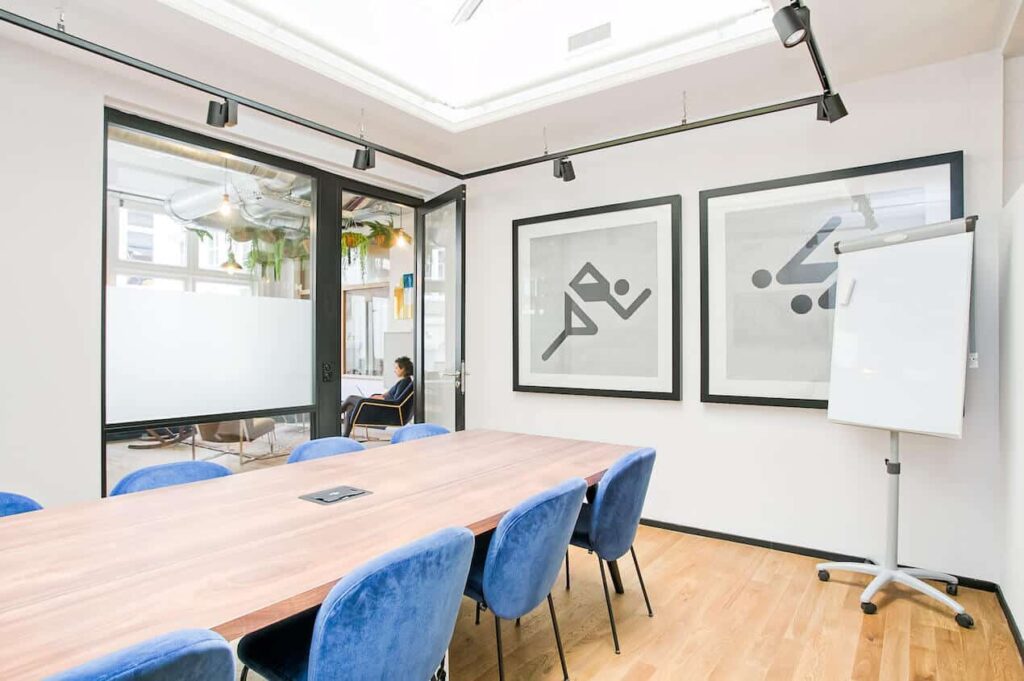
Best Coworking Spaces in Amsterdam: Your Complete Guide
Your coworking space in Amsterdam ends up doing far more work than a desk and a Wi-Fi password ever could. You take client calls there. You meet the people who send you your next project, and on most weekdays you spend more waking hours there than in your own flat. Choose badly and you’ll spend […]

Where to Rent Office Space in Amsterdam: Best Areas Compared
Amsterdam squeezes a remarkable range of business districts into a city you can cross by bike in half an hour. Pedal from a glass tower in Zuidas to a gabled canal house in the centre and the rent, the neighbours and the impression you make on clients all shift along the way.

Amsterdam Office Rental Prices: Why Flexible Workspace Is the Smarter Choice
You're comparing Amsterdam office costs, and the first numbers you'll find look almost too clean. A conventional lease runs 175 to 425 euros per square metre a year, depending on which postcode you're chasing. A serviced or flexible desk runs 250 to 800 euros a month, sometimes more, again shaped by district and building quality. Line those two numbers up side by side and the lease wins on paper, every time.
