


San Francisco’s journey from Gold Rush boomtown to global tech capital happened through a mix of timing, talent, and pure stubbornness. The city that gave us everything from the computer mouse to Instagram didn’t plan to become the world’s innovation hub-it just kept saying yes to crazy ideas that somehow worked.
The Birth of Silicon Valley: Early Foundations (1930s-1960s)
Long before anyone imagined pocket computers, the Bay Area was quietly collecting the right ingredients. Universities, defense spending, and California’s “let’s try it” attitude created something nobody quite expected-a place where wild ideas got taken seriously.
Stanford University’s Pivotal Role
While East Coast schools stayed buttoned-up and formal, Stanford broke the rules. Fred Terman pushed his engineering students toward the real world instead of more graduate school. When Bill Hewlett and Dave Packard came to him with a business idea in 1938, Terman didn’t lecture them about academic careers-he helped them find their first $538 loan. Their Palo Alto garage became HP’s birthplace and Silicon Valley’s unofficial starting point.
Terman’s approach was radical: make research useful, not just publishable. Stanford faculty didn’t just study semiconductors-they started companies that made them.
The Rise of Semiconductor Companies
William Shockley’s personality was toxic, but his timing was perfect. The transistor co-inventor moved to Mountain View in 1956, hoping to build a semiconductor empire near his aging mother. Shockley Semiconductor Laboratory failed because Shockley couldn’t manage people, but failure bred success. Eight employees quit in 1957 to start Fairchild Semiconductor-the “Traitorous Eight” became legends.
Fairchild spawned dozens of companies as employees left to start their own ventures. This job-hopping pattern horrified traditional corporations but supercharged innovation. Knowledge spread fast when people moved freely between companies.
Military and Defense Contracts as Early Catalysts
Cold War paranoia paid Silicon Valley’s bills. Lockheed’s Sunnyvale facility employed 25,000 people building spy satellites. When the military needed smaller, lighter electronics for missiles and spacecraft, Bay Area companies delivered. These defense contracts didn’t just fund research-they created engineering cultures that thrived on solving impossible problems quickly.
NASA’s moon shot gave local companies prestige and credibility that lasted decades. If your circuits could survive space, they could probably handle anything.
Frederick Terman and the Stanford Industrial Park
Terman’s Stanford Industrial Park sounds bureaucratic, but it was revolutionary. Universities traditionally kept industry at arm’s length. Terman invited companies onto campus, creating America’s first research park in 1951. HP became the first tenant, followed by others who wanted access to Stanford’s brain trust.
The park worked because it broke down walls. Professors consulted for companies, students got internships, and industry problems inspired academic research. Everyone benefited.
The Personal Computer Revolution (1970s-1980s)
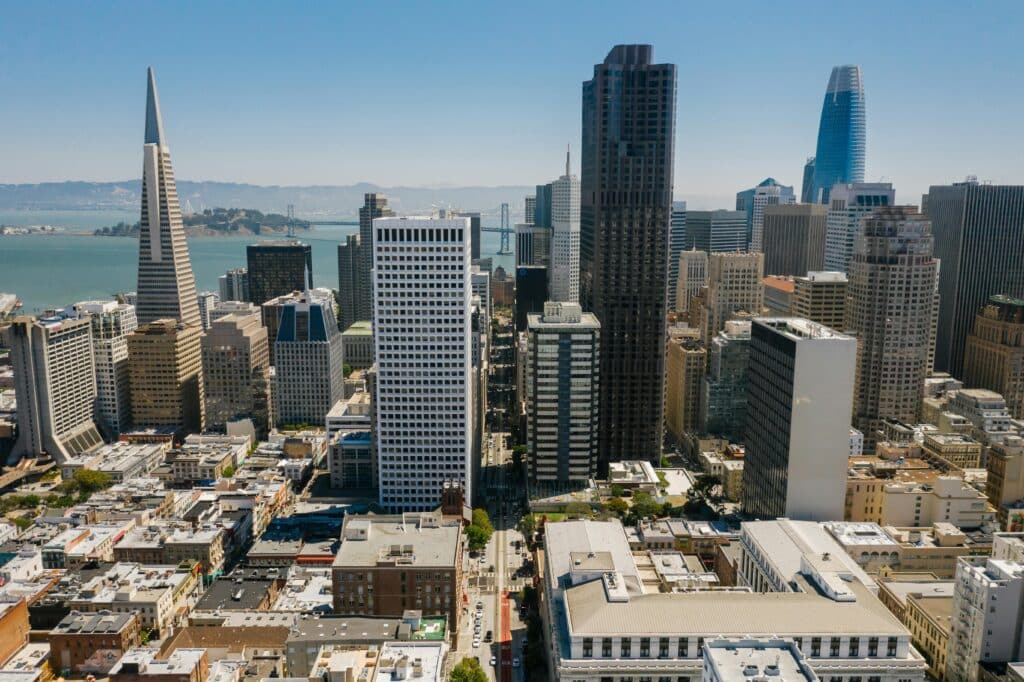
The personal computer revolution started with hobbyists who thought room-sized computers were ridiculous. Why shouldn’t everyone have their own computer? Silicon Valley turned this crazy idea into the foundation of modern life.
Homebrew Computer Club and the Maker Movement
Every other Wednesday, computer enthusiasts crammed into Stanford’s Linear Accelerator Center auditorium. The Homebrew Computer Club wasn’t corporate or academic-it was pure enthusiasm. Steve Wozniak brought the Apple I to show off. Members shared circuit designs, programming tricks, and big dreams about putting computers in every home.
The club’s newsletter connected isolated hackers across the Bay Area. These weren’t business meetings-they were informal gatherings of people convinced they could democratize computing power. Many were right.
Apple, Intel, and the Hardware Innovation Wave
Steve Jobs and Steve Wozniak embodied Silicon Valley’s creative tension. Wozniak built elegant circuits for the joy of engineering. Jobs insisted that computers should be beautiful, not just functional. Their partnership showed how technical brilliance plus marketing vision could create something neither could achieve alone.
Intel took a different path under Andy Grove’s leadership. While Apple chased consumer hearts, Intel focused on raw performance. Both approaches worked. Intel’s “Intel Inside” campaign made semiconductor brands matter to regular people-a marketing breakthrough that seemed impossible.
The rivalry between performance and elegance pushed both companies forward. Competition made everyone better.
The Emergence of Venture Capital on Sand Hill Road
Sand Hill Road venture capitalists offered more than money-they provided credibility and connections. A Kleiner Perkins or Sequoia Capital investment meant access to executives who’d built successful companies before. Portfolio companies helped each other, sharing knowledge and talent.
Eugene Kleiner exemplified this transition from entrepreneur to investor. One of Fairchild’s “Traitorous Eight,” he co-founded Kleiner Perkins in 1972, creating a template where successful founders became the next generation’s financial backers and advisors.
This concentrated expertise created self-reinforcing cycles. Good companies attracted smart money, which helped create great companies, which produced experienced investors who could spot the next breakthrough.
The Cultural Shift from Corporate to Entrepreneurial
IBM meant lifetime employment, formal hierarchies, and slow decision-making. Silicon Valley companies offered stock options, casual clothes, and the chance to ship products in months. When Atari advertised “Have fun making money,” they weren’t joking-they were describing a new relationship between work and life.
This cultural shift attracted risk-takers from around the world. Why climb a corporate ladder when you could build your own company? The Valley’s tolerance for failure meant that smart people could take big swings without destroying their careers.

The Internet Boom and Dot-Com Era (1990s-2000)
The World Wide Web created entirely new ways to do business. Silicon Valley companies led this transformation, though the journey got pretty bumpy before things stabilized.
The Rise of Internet Startups
Marc Andreessen helped create the Mosaic web browser at the University of Illinois, then headed west to start Netscape. The company’s August 1995 IPO doubled on its first trading day, proving that internet companies could command massive valuations despite minimal revenues. That success inspired thousands of entrepreneurs and investors.
Jerry Yang and David Filo started Yahoo while PhD students at Stanford. “Jerry and David’s Guide to the World Wide Web” began as a personal bookmark collection but evolved into the internet’s first major directory service. Their success showed that organizing online information could become a huge business.
The Dot-Com Bubble and Its Aftermath
By 1999, reason had left the building. Companies with business plans sketched on napkins raised millions. Pets.com spent $2.2 million on a Super Bowl commercial to sell dog food online. Webvan promised to revolutionize grocery shopping by delivering anything within 30 minutes. Most of these companies burned through cash faster than they acquired customers.
The 2000 crash was devastating but necessary. Over 200 public internet companies went bankrupt. The NASDAQ fell 78% from its peak. Yet this correction separated real businesses from marketing fantasies and taught valuable lessons about sustainable growth versus hype.
Survival of the Fittest: Companies That Endured
Jeff Bezos called Amazon “lucky to survive” the dot-com crash, but survival wasn’t about luck. While competitors spent wildly on marketing, Amazon obsessed over customer satisfaction and logistics efficiency. Google’s Larry Page and Sergey Brin focused on building the world’s best search engine rather than chasing quick advertising dollars.
Companies that survived shared common traits: conservative cash management, genuine customer value, and founders who planned for decades, not just the next funding round.
Infrastructure Development and Broadband Expansion
The dot-com crash left behind valuable infrastructure. Fiber optic cables, data centers, and broadband networks built during the boom enabled the next wave of innovation. This digital infrastructure made Silicon Valley even more attractive for technology companies while supporting increasingly sophisticated applications.
The Social Media and Mobile Revolution (2000s-2010s)
Smartphones and social networks didn’t just change technology-they changed how humans interact. Silicon Valley companies built the platforms that now shape global communication and commerce.
Facebook, Twitter, and the Social Network Phenomenon
Mark Zuckerberg started Facebook in his Harvard dorm, but the company’s real innovations happened after moving to Palo Alto in 2004. Keeping the platform exclusive to college students created desire and social pressure that traditional marketing couldn’t match. Scarcity worked.
Twitter emerged from a struggling podcasting company called Odeo when co-founder Jack Dorsey pitched a “status update” service during a brainstorming session. Great ideas often come from failed ventures-the key is recognizing them when they appear.
Both platforms proved that software could scale to billions of users with relatively small teams, fundamentally changing expectations about global business reach and operational efficiency.
The iPhone Effect and Mobile-First Development
Steve Jobs returned to Apple in 1997 and spent a decade building toward the iPhone’s 2007 launch. The device didn’t just create a new product category-it enabled entire industries. App Store economics let individual developers reach global audiences overnight. Companies like Uber and Instagram built billion-dollar businesses using mobile-first strategies impossible in the desktop era.
Silicon Valley’s concentration of mobile expertise created powerful network effects. The best developers attracted the smartest investors, who funded the most promising companies, which attracted even better developers.
The Sharing Economy: Uber, Airbnb, and Platform Innovation
Travis Kalanick and Garrett Camp created Uber because San Francisco taxis were unreliable. Brian Chesky and Joe Gebbia started Airbnb to help pay rent. These weren’t grand visions of “disruption”-they were personal solutions that happened to scale globally.
Both companies demonstrated technology’s real power: coordinating existing resources more efficiently than traditional institutions. They didn’t replace taxis or hotels-they created better ways to connect supply with demand.
Cloud Computing and SaaS Transformation
Companies like Salesforce pioneered Software-as-a-Service models that eliminated the need for expensive on-premises installations. Marc Benioff’s “No Software” campaign seemed radical in 1999, but it accurately predicted how businesses would consume technology. Cloud computing reduced barriers for new companies while enabling unprecedented flexibility and scalability.
Key Factors That Made San Francisco a Tech Hub
Several interconnected advantages created Silicon Valley’s dominance. Understanding these factors explains why other regions struggle to replicate the ecosystem’s success.
Access to Top-Tier Talent and Universities
Stanford, UC Berkeley, and UCSF continuously supply brilliant graduates with both technical skills and entrepreneurial ambition. These universities attract global talent and emphasize practical applications over pure theory. The talent pipeline sustains continuous innovation waves.
Dense Network of Investors and Accelerators
Venture capital concentration creates unmatched funding access for promising entrepreneurs. Experienced investors provide strategic guidance, industry connections, and operational expertise beyond just money. This sophisticated investor network improves startup success rates through better terms and more supportive partnerships.
Culture of Risk-Taking and Innovation
Silicon Valley celebrates entrepreneurial risk-taking and treats failure as education rather than career death. This environment encourages breakthrough innovations that might seem too audacious elsewhere. The region’s tolerance for failure, combined with abundant second chances, promotes the bold thinking that produces revolutionary technologies.
Strong Intellectual Property Protection
Robust IP laws encourage innovation by ensuring inventors can capture their creations’ value. Strong protection enables the licensing and technology transfer that helps promising innovations reach commercial markets while supporting complex relationships between universities, corporations, and startups.
The Modern Tech Ecosystem in San Francisco
Today’s San Francisco represents the world’s most sophisticated technology ecosystem. Decades of innovation, investment, and institution-building continue attracting ambitious entrepreneurs and innovative companies from around the globe.
Major Tech Companies and Their Headquarters
Technology leaders like Salesforce, Twitter, Uber, and Airbnb maintain significant headquarters within San Francisco, while Apple, Google, and Facebook operate from nearby Bay Area locations. These major employers create opportunities and attract supporting businesses while providing career stability that draws top global talent.
The Startup Landscape and Unicorn Companies
San Francisco keeps producing billion-dollar “unicorn” companies across diverse technology sectors. Emerging companies in artificial intelligence, biotechnology, fintech, and enterprise software build upon the region’s established strengths. The startup ecosystem benefits from accelerators, incubators, and co-working spaces that support early-stage entrepreneurs and improve success rates.

Tech Hubs Within the Hub: SOMA, Mission Bay, and Beyond
Different neighborhoods have developed distinct specializations. South of Market houses enterprise software companies, while Mission Bay focuses on biotechnology near UCSF. The Financial District attracts fintech firms, and areas like Potrero Hill offer more affordable options for growing startups. This geographic clustering creates local networks that enhance collaboration and knowledge sharing.
The Role of Co-Working Spaces and Innovation Centers
Flexible workspace solutions support technology companies at different growth stages. These facilities enable startups to access professional environments without long-term commitments that could constrain flexibility. Modern providers like Mindspace Market Street offer adaptable solutions-from coworking memberships for solo entrepreneurs to private offices for established teams-that scale with business needs while maintaining access to networking opportunities and professional amenities.
Frequently Asked Questions
What makes San Francisco different from other tech hubs?
San Francisco’s combination of world-class universities, venture capital concentration, and risk-tolerant culture creates advantages other regions can’t easily replicate. The density of talent, capital, and expertise enables faster innovation and more ambitious projects than most locations support. Network effects mean success attracts more success, drawing the best entrepreneurs, investors, and technical talent globally.
When did San Francisco become the tech capital of the world?
The region’s emergence as global tech capital happened gradually, but the 1990s internet boom marked when it achieved undisputed leadership. The dot-com era proved Silicon Valley could create revolutionary technologies and massive companies. The iPhone’s 2007 launch and mobile revolution further cemented the region’s consumer technology dominance.
Which companies started the San Francisco tech hub?
Early semiconductor companies like Fairchild and Intel built the foundation, while personal computer pioneers like Apple and internet companies like Netscape demonstrated the region’s ability to lead successive innovation waves. Each generation of successful companies created conditions for subsequent entrepreneurship cycles.
Is San Francisco still the best place to start a tech company?
Despite high costs and intense competition, San Francisco remains the world’s premier location for ambitious technology startups. The region offers unmatched access to venture capital, technical talent, and potential customers that significantly improve success odds. Hybrid office solutions and customized team suites help startups manage costs while accessing ecosystem advantages.
What percentage of San Francisco’s economy is tech?
Technology represents roughly 25-30% of San Francisco’s economy by employment and output. Tech growth drives demand for supporting services like legal, accounting, marketing, and real estate, amplifying the sector’s economic impact beyond direct employment into real estate prices, local culture, and municipal policy throughout the region.
The Author

You might also like these reads — picked just for you.
Why Flexible Workspaces in San Francisco Make Sense in 2026
San Francisco spent three years as the cautionary tale of American office real estate. That story has turned. Vacancy fell to 30.1% in the second quarter of 2026, down from 33.8% a year earlier, and AI companies signed enough space to make the city the largest single contributor to national office absorption. Rents are climbing […]
Virtual Offices in New York: How Do They Work and What Are the Benefits in 2026?
You want a New York address on your invoices without paying New York rent, and a virtual office gets you exactly that. You rent a real commercial street address at a staffed building, someone on the team there signs for your mail, and you book a meeting room on the days you actually need to […]
Why Williamsburg Is the Answer to Your Team’s New York Commute Issues
If you are weighing where to base a team in New York, the first question is rarely about square footage. It is about the L train. Will your people spend two hours a day getting to work? Will clients agree to come out to Brooklyn? What happens on a Tuesday morning when the L runs […]
