


There’s a pattern playing out in New York real estate right now, and if you’ve been hunting for office space, you’ve probably felt it. The fastest-growing companies in the city, namely AI startups with fresh funding and aggressive hiring plans, are touring spaces, signing leases, and moving in faster than the market has seen in years. One Brooklyn landlord described fielding calls from half a dozen AI companies in a single 48-hour stretch, with some of them touring that same week and signing within two.
A lot of those companies aren’t landing in Midtown. They’re crossing the river.
Williamsburg has quietly become one of the most logical homes for an AI or tech team building in New York, and the reasons go well beyond cheaper rent. Here’s what’s actually driving the shift, and why it makes sense.
The numbers behind the Brooklyn boom
Start with the macro picture, because it’s striking. Brooklyn’s startup scene has grown 356% since 2008, and the borough now ranks as the second-largest startup ecosystem globally for software and fintech, sharing the same investor pool as Manhattan while operating at a fraction of the cost.
Williamsburg sits at the center of that. It’s the fastest-growing startup neighborhood in New York outside Manhattan, and the rent gap is real: Brooklyn’s average asking rent runs around $54 per square foot, compared with Manhattan’s $70, which is roughly a 22% discount. In North Brooklyn, including Williamsburg, that number drops closer to $41. For a founder watching runway, that difference isn’t a rounding error. It’s a hire.
But the most telling signal isn’t the discount. It’s who’s paying full price to be here anyway. One of Williamsburg’s biggest office leases in over a year went to an AI-powered startup that signed a 10-year commitment at 25 Kent Avenue, the same waterfront building Mindspace Williamsburg calls home. A decade-long bet on this address, made by a company whose entire job is predicting where things are headed, is about as clear a vote of confidence in the neighborhood as you’ll find.
Why AI teams specifically want to be in the room
Here’s the part that surprises people. AI companies are among the heaviest in-office users in the market. While much of the corporate world is still negotiating hybrid schedules, AI firms tend to have teams working in person most days of the week. This is because the work rewards proximity. Fast iteration, whiteboard problem-solving, and the kind of unplanned conversations that move a roadmap forward all happen better in a room than over a video call.
That changes what a company needs from its space. If your team is in five days a week, the office can’t just be a place to park laptops. It has to be somewhere people actually want to spend their days, and that comes from two things working together: a physical environment that supports a long day, and a community that makes the day feel like more than just work.
On the physical side, the details that used to read as perks have quietly become infrastructure. A full fitness center means someone can train at lunch instead of skipping it for a third day in a row. A rooftop gives a team somewhere to take a Friday afternoon, or host a client without booking a conference room. Meditation pods and phone booths carve out quiet inside an in-person culture that can otherwise get loud. Even a bouldering wall does real work. It’s the kind of thing that turns a coffee break into a five-minute reset, and gives people a reason to step away from the screen before they burn out at 4 p.m. When a team is together every day, these aren’t luxuries. They’re what makes five days sustainable.

The second half is the part a buildout can’t buy: programming and community. A flex space isn’t just square footage. It’s a calendar. Networking events, founder breakfasts, workshops, and member mixers turn a building full of strangers into a network your team is actually plugged into. For an AI startup hiring fast and trying to build culture from scratch, that ambient community does a lot of quiet work. Your team meets peers from other companies, your founders trade notes with people solving similar problems, and the office becomes a place where things happen rather than just a place where work gets done. That’s something a private lease and an empty floor will never replicate, no matter how nice the buildout.
This is exactly where a flex model earns its keep. Signing a traditional 5- or 10-year lease and building out a floor from scratch is a slow, capital-heavy bet for a company that might double headcount in a year. A move-in-ready private office that scales with you removes that risk, and you get a real, branded space without betting the runway on a buildout.
The ‘flight to quality’ is real. And Brooklyn benefits
The dominant trend shaping startup office decisions in New York right now is what brokers call the flight to quality: instead of leasing large, average spaces, companies are choosing smaller footprints in better buildings with stronger locations. Fewer people may be in the office on any given day, but when they are, the experience has to justify the commute.
Williamsburg fits that brief almost perfectly. It offers waterfront character, a dense concentration of creative and technical talent, and a neighborhood identity that says something specific about a company – serious about the work, not corporate. For a founder thinking about how the space reads to a recruit walking in for a final-round interview, or an investor stopping by before a check clears, that matters more than people admit.
There’s also the talent equation. Many founders are choosing Williamsburg because it’s close to where their people already live. Positioning the office near the team, rather than forcing everyone into a Midtown commute, makes a five-day-a-week culture far easier to sustain. The L and G trains put Manhattan a short ride away when you need it, but the gravity has shifted east.
What it actually looks like to set up here
If you’re weighing the move, the practical considerations break down into a few questions:
Stage and team size
Day passes and coworking memberships suit early or distributed teams testing the waters. Once a team hits roughly eight to twelve people, a private office or suite usually becomes both more economical and more functional than buying individual desks, especially if you’re booking meeting rooms often.
The building, not just the floor
In a five-day-a-week setup, amenities stop being perks and start being infrastructure. A gym you’ll actually use, outdoor space, quiet rooms, and meeting rooms that are free when you need them are what make long in-person days sustainable. Look just as hard at the programming: the events, networking, and community calendar are what turn an address into a network.
Flexibility on terms
The whole point of choosing flex over a direct lease is that you’re not locked into a footprint you’ll outgrow, or overpay for, in eighteen months. Make sure whatever you sign can actually scale up and down with you.
Mindspace Williamsburg was built for exactly this kind of company. Set inside the 25 Kent building on the Brooklyn waterfront, it pairs the physical infrastructure a five-day team needs, floor-to-ceiling Manhattan skyline views, a fitness center with a bouldering wall, meditation pods, a communal rooftop, and meeting rooms built for client pitches, with the thing that’s harder to find: an active community. A steady calendar of networking events, founder gatherings, and member programming means your team isn’t just renting desks; they’re stepping into a network. It’s the combination, a space worth showing up to, and a community worth being part of, that makes the five-day week feel less like a mandate and more like a place you’d choose to be.

The takeaway
The AI land grab in New York is real, and it’s reshaping where ambitious companies plant their flag. Manhattan still has its pull, but for founders who care about cost, proximity to talent, and a space their team actually wants to show up for, Williamsburg has become the obvious answer rather than the alternative.
If you’re scaling a team and rethinking where it should live, it’s worth seeing the neighborhood for yourself.
The Author

You might also like these reads — picked just for you.
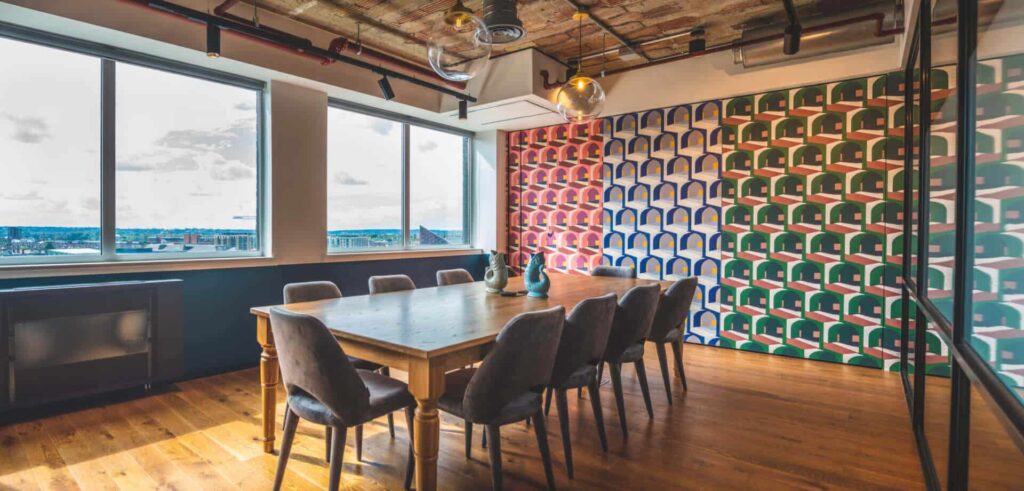
Why AI Companies in London Are Choosing Flexible Workspace
AI companies signed a record 565,000 square feet of London office space in the first four months of 2026, with another 288,000 square feet under offer. That already exceeds the 211,000 square feet AI firms took across the whole of 2025. The exact figures vary by source, but the trend is clear: London’s AI market […]
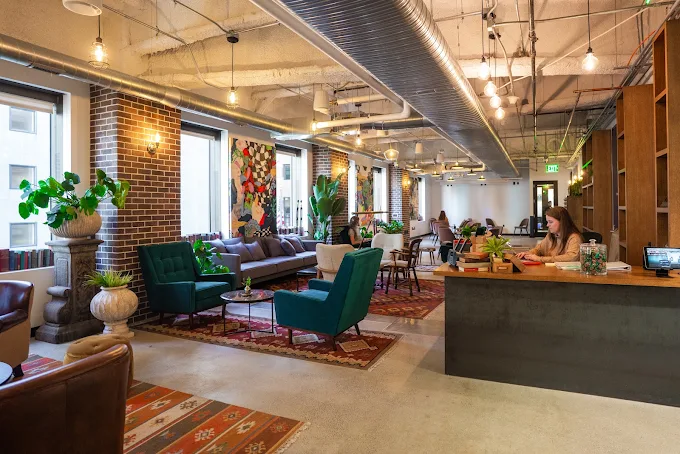
Why Move-In Ready Workspaces in San Francisco Are Winning in 2026
San Francisco’s office market is booming by one metric and nearly 32% empty by another. Both are happening right now. As the SF Standard’s Q2 2026 report says, landlords experience the biggest competition volume since the pandemic, but at the same time, they have not seen this much sit empty. CBRE’s Alexis Walsh highlighted the […]
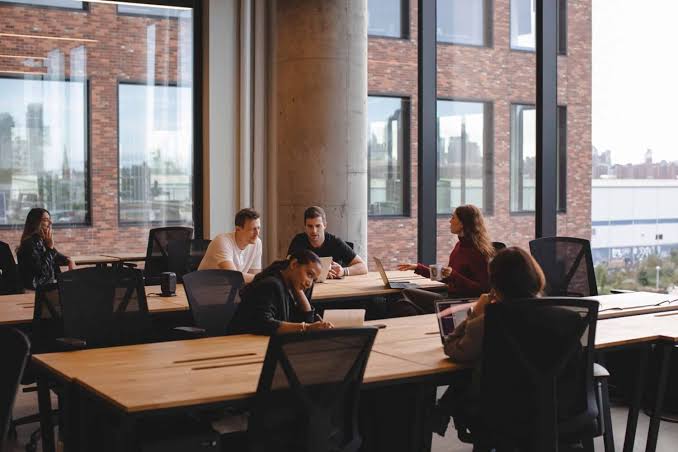
Best Office Space for Rent in NYC: Best Coworking and Commercial Offices
New York City has the densest concentration of coworking spaces in the United States and the widest price range of any market in the country. A hot desk at a members’ club in SoHo can cost more than a private office in most other cities. A private studio for four on the Williamsburg waterfront costs […]
